Nano in the Garage: Meet the Amateur Scientists Experimenting at the Edge of the Invisible

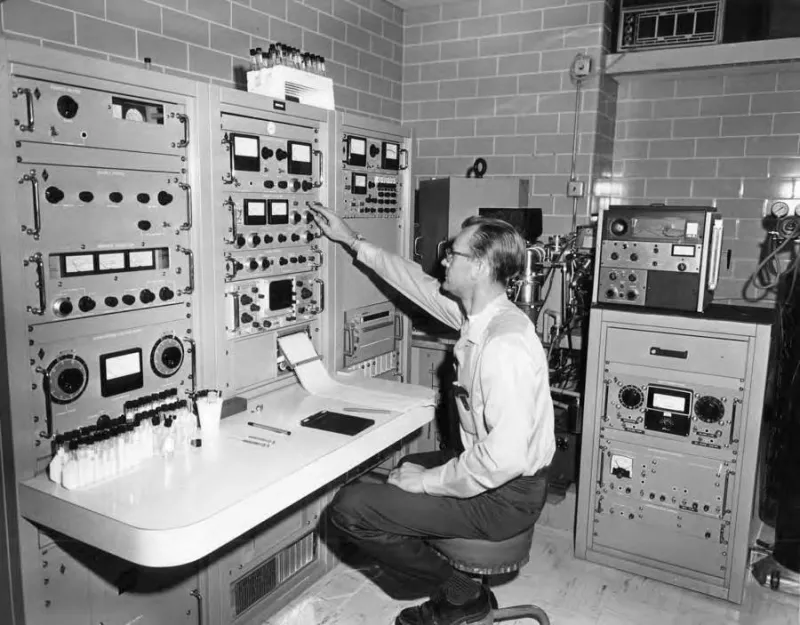
Photo: Rare4, CC BY-SA 3.0, via Wikimedia Commons
In a converted garage in suburban Portland, a 34-year-old software engineer named Derek keeps a scanning tunneling microscope he built himself from salvaged parts and open-source schematics he found on a forum. It took him two years and about four thousand dollars. It works. Not perfectly — he'll be the first to tell you that — but well enough to image surfaces at the atomic scale on a Tuesday night after his kids go to bed.
"People look at me like I'm crazy," he says, laughing. "But this stuff is accessible now in a way it just wasn't ten years ago. The knowledge is out there. The parts are out there. Why wouldn't I try?"
Derek is part of a quietly growing movement — call it biohacking's nerdy cousin — of amateur and independent researchers who are poking around at the nanoscale outside of any university affiliation or corporate lab. They're scattered across Reddit threads, Discord servers, and scrappy community lab spaces, and they're doing things that would have seemed impossible for non-institutional scientists just a decade ago.
What "DIY Nanotech" Actually Looks Like
Let's be clear about something upfront: most of what hobbyist nano enthusiasts are doing isn't exactly synthesizing novel nanomaterials in their kitchen sink. The community spans a pretty wide range of sophistication and ambition.
At the accessible end, you've got people experimenting with colloidal silver and gold nanoparticles — synthesis processes that have been documented extensively and require relatively simple chemistry setups. Online communities share detailed protocols, and the precursor chemicals are legally purchasable. It's not glamorous, but it's a real entry point into understanding nanoscale chemistry.
A step up from that, you have enthusiasts working with carbon-based nanomaterials — graphene oxide, carbon nanotubes — often sourced from commercial suppliers and then characterized using equipment they've either built or accessed through community labs like Genspace in New York or BioCurious in the Bay Area. These spaces have started acquiring more sophisticated instrumentation as the maker movement has matured.
And then there are people like Derek, building their own imaging equipment. The open-source STM and AFM community is small but serious, sharing firmware, mechanical designs, and troubleshooting advice across platforms with a level of rigor that would surprise most professional researchers.
"There's a guy in Ohio who has been documenting his STM build for three years on YouTube," says one community lab manager who asked not to be named. "His characterization methodology is genuinely solid. It's not publishable in Nature, but it's real science."
The Knowledge Gap Is Closing Fast
What's making all of this possible now, when it wasn't five or ten years ago, is a combination of forces that are compressing the distance between institutional and amateur capability.
First, there's the sheer volume of open-access scientific literature. Pre-print servers like arXiv and ChemRxiv have put cutting-edge research into the hands of anyone curious enough to read it. Second, the maker movement created a generation of people comfortable with precision fabrication, electronics, and iterative engineering — skills that translate surprisingly well to instrument-building. Third, online communities have become genuinely effective at transferring tacit knowledge, the kind of stuff that used to live only in a graduate advisor's head.
"The barrier to entry for understanding nanotech has dropped dramatically," says Dr. Sarah Kowalski, a materials science educator who has been watching the DIY community grow. "The barrier to doing it safely and responsibly hasn't dropped at the same rate, and that gap is what worries me."
The Safety Conversation Nobody Wants to Have
Here's where things get complicated. Nanotechnology's most exciting properties — the fact that materials behave differently at the nanoscale, that particles can cross biological barriers that bulk materials can't, that surface-to-volume ratios create unexpected reactivity — are also exactly what makes uncontrolled experimentation genuinely risky.
Nanoparticle inhalation is a real concern. Certain nanomaterials have demonstrated cytotoxicity in lab studies. The long-term health effects of many engineered nanomaterials are still being studied. And unlike biohacking, where the biosafety community has developed relatively robust community norms around containment and risk assessment, the nano hobbyist community is still figuring out its safety culture.
Some community labs have started developing nano-specific safety protocols, but it's inconsistent. Many hobbyists working at home have no institutional guidance at all.
"I've seen people in forums talking about synthesis procedures with zero mention of ventilation, PPE, or waste disposal," says one environmental health researcher who has been monitoring DIY nano communities. "These aren't bad people. They just don't know what they don't know."
The regulatory picture is equally murky. There's no specific federal framework that governs what an individual can synthesize in their home for personal research purposes, and nanomaterials occupy a gray zone in EPA and OSHA regulations that was designed with industrial contexts in mind. Nobody is kicking down doors over a hobbyist's colloidal gold experiment — but the absence of regulation isn't the same as the absence of risk.
The Case for Taking Citizen Nano Science Seriously
For all the legitimate concerns, there's a real argument that dismissing the DIY nano community is a mistake.
Citizen science has a genuinely strong track record in fields like astronomy, ecology, and even genomics. The biohacking community, despite early skepticism from institutional scientists, has contributed real innovation and has also developed reasonably mature safety norms over time. There's no obvious reason nano should be different, given enough time and the right institutional support.
Some researchers are already trying to build bridges. A handful of university labs have started informal mentorship relationships with community lab members, sharing protocols and safety guidance in exchange for fresh perspectives and, occasionally, genuinely interesting experimental results. It's not systematic, but it's a start.
"Curiosity-driven science happening outside institutions isn't new," Dr. Kowalski points out. "Darwin was essentially an amateur. The question is whether we create pathways for these people to do their work safely and rigorously, or whether we just ignore them and hope nothing goes wrong."
Where This Is All Heading
Derek, back in his Portland garage, is working on improving his STM's signal-to-noise ratio. He's been in contact with a PhD student at Oregon State who found his build documentation online and had questions. They've been trading emails for a few months.
"She knows stuff I don't," he says. "I know stuff she doesn't. That feels like how science is supposed to work."
Maybe that's the most honest framing for where DIY nanotech sits right now — somewhere between a safety concern and an untapped resource, waiting for the institutions and the hobbyists to figure out how to talk to each other. The tools are getting cheaper, the knowledge is getting more accessible, and the community is growing whether the establishment pays attention or not.
The only real question is whether that growth happens with guardrails or without them.