Atomic Ambitions: How Washington Is Quietly Betting Billions on the Nano Manufacturing War With China
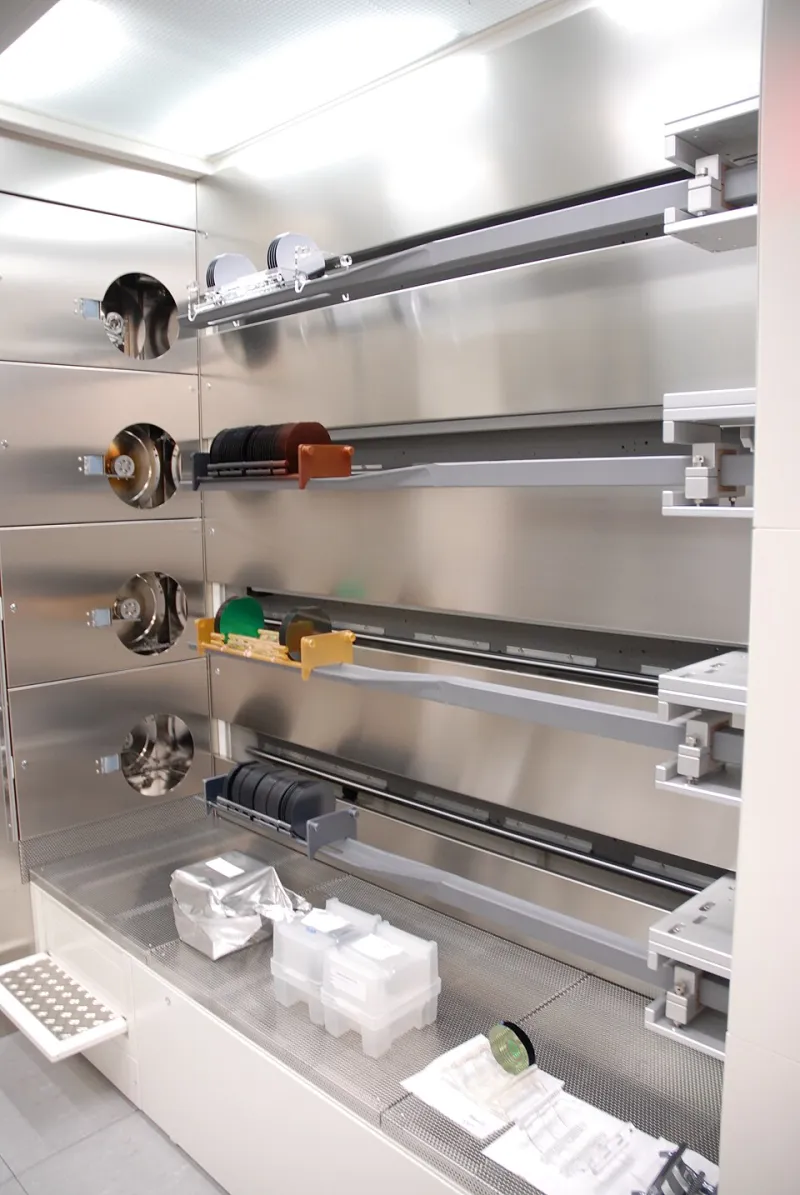
Photo: Guillaume Paumier (user:guillom), CC BY-SA 3.0, via Wikimedia Commons
There's a war being fought right now, and most people scrolling through their feeds have absolutely no idea it's happening. No missiles, no troops — just atoms, angstroms, and an enormous pile of federal dollars being quietly routed into laboratories, fabrication facilities, and startup balance sheets across the United States. Welcome to the nano manufacturing cold war, and spoiler: America is playing catch-up.
China didn't stumble into atomic-scale dominance by accident. For more than a decade, Beijing has executed a deliberate, well-funded strategy to own the physical infrastructure of the nano world — from rare earth processing to advanced lithography equipment supply chains. Meanwhile, Washington spent much of that same period distracted by software, platforms, and the venture capital gold rush of consumer apps. The bill for that distraction is coming due.
The Quiet Money Trail
If you know where to look, the federal spending signals are everywhere. The CHIPS and Science Act alone authorized over $52 billion for semiconductor-related manufacturing, and a significant chunk of that funding flows directly into processes operating at the nanometer scale — we're talking 3nm and 2nm node fabrication, atomic layer deposition tools, and precision materials science that would've looked like science fiction fifteen years ago.
But it doesn't stop at chips. The Department of Defense has been quietly expanding its investment in nano-enabled materials through programs buried inside defense appropriations bills. The National Nanotechnology Initiative, which coordinates federal nanotech R&D across more than twenty agencies, has seen its combined budget creep upward year over year, even as its public profile stays deliberately low-key. These aren't accident numbers — this is a strategic posture.
What's interesting is how little of this makes it into mainstream tech coverage. You'll see plenty of breathless reporting about AI funding or EV battery breakthroughs, but the nano manufacturing investment story is largely being told in government procurement documents and academic press releases. That's partly by design. Nobody in Washington wants to publicly frame this as a head-to-head competition with China — the diplomatic optics are complicated — but behind closed doors, that's exactly what it is.
Who's Positioning as a National Champion
A handful of American companies are moving fast to plant their flags in this space, and federal money is absolutely part of their growth story.
Intel's aggressive push back toward domestic fabrication — particularly its Ohio and Arizona fab expansions — is explicitly tied to sub-3nm process development. Applied Materials and Lam Research, both Bay Area stalwarts, are deeply embedded in the atomic-scale deposition and etch equipment markets that define who can actually manufacture at these dimensions. Neither company gets mentioned in the same breath as Apple or Google at dinner parties, but in terms of strategic national importance, they arguably matter more right now.
On the startup side, companies like Atomica (formerly known for MEMS work) and a cluster of university spinouts from MIT, Stanford, and Carnegie Mellon are building tools and processes specifically designed to reduce American dependence on foreign-controlled nano manufacturing inputs. Some of these startups are running on DARPA contracts and Small Business Innovation Research grants — not flashy Series B rounds from Sand Hill Road. That's a meaningful shift in how early-stage nano companies are getting capitalized.
What China Actually Controls
Let's be honest about the scale of the problem. China currently dominates the processing of rare earth elements that are essential to nano-scale material synthesis — we're talking neodymium, dysprosium, and a dozen others that show up in everything from quantum dot displays to nano-enabled permanent magnets. That upstream control is a serious leverage point.
Beyond raw materials, Chinese foundries have been aggressively investing in mature node manufacturing — the 28nm to 65nm range — which may not sound cutting-edge but represents enormous volume production capacity for sensors, power management chips, and IoT hardware. The strategy appears to be: let TSMC and Samsung fight over the bleeding edge while China locks up the middle of the market and the materials that feed the whole ecosystem.
There's also a talent dimension here that doesn't get enough attention. Chinese universities are graduating nano-focused engineers and materials scientists at a rate that dwarfs American output. We've covered the domestic talent shortage before on NanoChan, and it connects directly to this geopolitical story — you can't build fab capacity if you don't have the workforce to run it.
The Supply Chain Scenario Nobody Wants to Talk About
Game out a scenario where US-China tensions escalate significantly — not an outlandish hypothetical given recent years — and the nano supply chain picture gets uncomfortable fast. American manufacturers dependent on Chinese-processed rare earths, Chinese-made precision tooling components, or Chinese-controlled precursor chemicals for atomic layer deposition processes would face serious disruption.
The Pentagon has war-gamed versions of this scenario. The conclusions, from what's been made public, are not reassuring. Domestic substitution for some of these inputs is possible but would take years and require sustained investment that hasn't fully materialized yet.
The optimistic read — and there is one — is that the current federal investment surge, if sustained and well-executed, could meaningfully reduce these vulnerabilities within a decade. New domestic rare earth processing facilities in Texas and Wyoming are coming online. American equipment makers are investing in R&D to recapture market share in tools they once dominated. University research pipelines are being specifically funded to address nano manufacturing gaps.
Why This Actually Matters to the Tech Community
For the NanoChan crowd, this isn't just geopolitics — it's the foundational infrastructure story of the next twenty years of technology. Every breakthrough in nano-enabled medicine, quantum computing, or advanced energy storage that we talk about on this site depends on someone being able to actually manufacture at atomic scale reliably, affordably, and domestically.
If America gets this right, the economic and technological upside is genuinely enormous. If it gets it wrong — or moves too slowly — the dependency risks are real and the strategic consequences could reshape global tech leadership in ways that make the current AI competition look like a warm-up act.
The atoms are small. The stakes absolutely aren't.