Hired for the Wrong Degree: How Nanotech Companies Are Scrambling to Rethink the Talent Pipeline

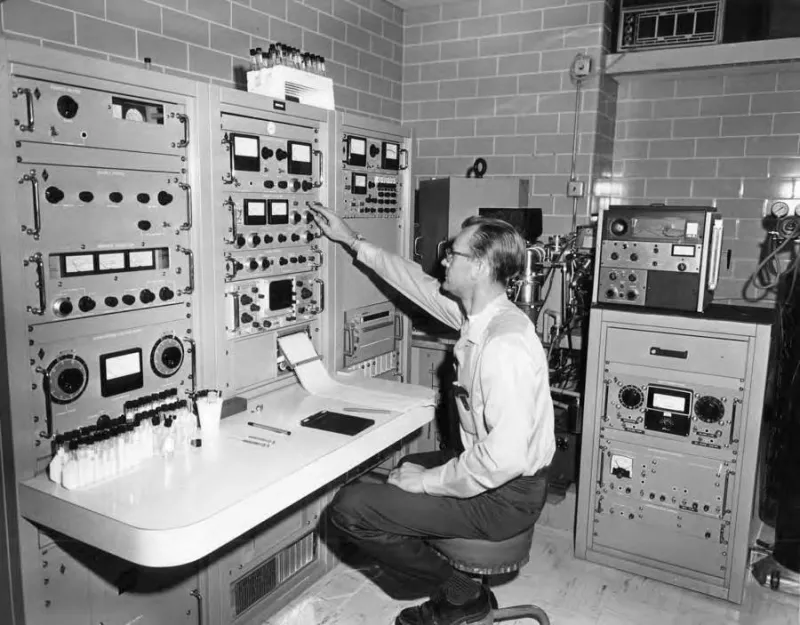
Photo: Webster & Stevens, Public domain, via Wikimedia Commons
Here's a scenario that's playing out in hiring offices across the country right now: a nanotech startup posts a job for a process engineer. Hundreds of applications roll in. Most of them are from PhD candidates who've spent five or six years mastering a very specific corner of materials science. Brilliant people. Genuinely impressive resumes. And almost none of them know how to write a process control document, navigate an ISO audit, or think about yield rates at commercial scale.
That's not a knock on those candidates. That's a structural problem — and it's one the nanotech industry has been quietly choking on for years.
The Mismatch Nobody Wants to Say Out Loud
Ask any hiring manager at a nanotech firm what their biggest headache is, and after a beat of hesitation, you'll usually hear some version of the same thing: the people coming out of programs know the science, but they don't know the job.
"We're not just looking for someone who can publish," said one hiring director at a nanomaterials company in the Research Triangle area of North Carolina, who asked not to be named because they didn't want to publicly criticize partner universities. "We need people who understand how to take a process that works at milligram scale and think through what breaks when you're trying to do it at kilograms. That mindset isn't being taught."
The issue isn't limited to research roles. In fact, the talent crunch is arguably worse in manufacturing, quality assurance, regulatory affairs, and commercialization — positions that are essential for actually getting a product out the door but that rarely show up in academic training plans. A PhD in nanotechnology might be perfectly equipped to characterize a novel nanoparticle but have zero exposure to FDA submission workflows, supply chain documentation, or failure mode analysis.
Academic program directors, for their part, aren't totally in denial. But they're also working within real constraints.
"Our job is to produce researchers," explained one director of a graduate nanoscience program at a public university in the Midwest. "Funding structures, tenure incentives, the way we measure success — it all points toward publications and grants. We're not set up to be vocational training for industry, and honestly, I'm not sure we should be entirely."
That tension — between academic mission and industry need — is at the heart of the problem, and it's not going to resolve itself.
The People Caught in the Middle
For early-career scientists, the mismatch creates a genuinely disorienting experience. Many graduate students enter programs expecting that a PhD will make them competitive for industry jobs. What they often find instead is that they're overqualified for entry-level positions but lack the specific applied skills that mid-level roles require.
"I finished my dissertation on nanostructured drug delivery systems," said one recent PhD graduate now working in a business development role at a biotech firm in San Diego. "I applied to probably thirty jobs that looked like they matched my background. I kept making it to final rounds and then losing out to people with less technical depth but more experience with things like tech transfer or regulatory strategy. It was demoralizing."
She eventually landed her current role through a fellowship program that specifically bridged academic research and commercial applications — but she describes that program as a lucky accident rather than a designed pathway.
That luck-of-the-draw quality is a recurring theme. The people who successfully navigate from grad school into industry roles often credit a specific advisor who had industry connections, a side internship they hustled to find on their own, or a postdoc at a national lab where applied work was part of the culture. Systematic? Not even close.
What Some Companies Are Actually Doing About It
A handful of companies aren't waiting for universities to fix this. They're building their own pipelines, sometimes from scratch.
One approach gaining traction is the internal apprenticeship model, where companies hire candidates with strong scientific foundations and then invest heavily in on-the-job training for the applied skills that schools aren't delivering. It's expensive and slow, but several firms say it's the only way they've found to consistently build the workforce they need.
Others are partnering directly with community colleges and technical schools to develop programs focused specifically on nanofabrication technician roles — the people who actually run the equipment in a cleanroom day to day. These aren't PhD-level positions, but they're chronically hard to fill, and the technical schools have proven more responsive to industry input than research universities.
There's also growing interest in stackable certificate programs — shorter, modular credentials that working professionals or recent grads can add to their existing qualifications. The idea is to let someone with a chemistry background pick up focused training in, say, semiconductor manufacturing quality systems or nanomaterial scale-up without committing to another full degree.
"We've been piloting a six-month certificate track with a state university partner," said a workforce development lead at a nanotech firm in upstate New York. "The early results are promising. We're seeing people come in with much better baseline understanding of what a production environment actually looks like."
The Deeper Fix Requires Uncomfortable Conversations
The certificate programs and apprenticeships are useful, but they're patches on a larger structural issue. If the nanotech industry is going to scale the way its proponents believe it can, the talent pipeline needs a more fundamental redesign.
That probably means universities and industry getting genuinely uncomfortable with each other. It means academic programs admitting that not every PhD student is going to become a professor, and designing curriculum accordingly. It means companies being willing to articulate specifically what they need rather than posting vague job descriptions and then complaining that applicants don't fit. And it means federal funding bodies reconsidering whether grant structures inadvertently punish the kind of applied, translational work that produces industry-ready graduates.
None of that is easy. Academic culture moves slowly. Industry expectations shift fast. And the people trying to bridge the two — the students, the mid-career scientists, the program coordinators running bridge fellowships on shoestring budgets — are doing it mostly without institutional backing.
But the alternative is watching one of the most consequential technological fields of the next century stay stuck in a talent bottleneck that's entirely of our own making. The science is extraordinary. The gap between that science and a functioning workforce is a policy failure, not an inevitability.
Somebody's going to have to own that conversation. Might as well start now.