The Tap Water Endgame: Can Nano Filters Beat the PFAS Clock?
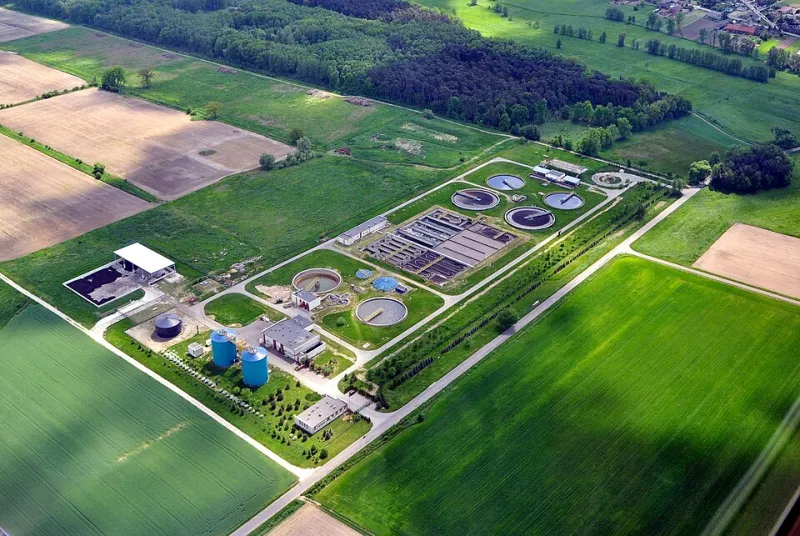
Photo: Stiopa, CC BY-SA 3.0, via Wikimedia Commons
At a municipal water plant outside Kalamazoo, Michigan, a shipping-container-sized pilot skid has been running since early 2026. Inside, water pushes through a cartridge packed with a nanoscale sorbent designed to grab PFAS molecules and hold on tight. The goal is simple to say and hard to do at municipal scale: pull PFOA and PFOS down to 4 parts per trillion. That is the number EPA's 2024 drinking water rule put on the books, and it is the number water superintendents from Michigan to North Carolina have taped to their monitors.
The chemistry is impressive. The calendar is terrifying.
The Pilot Plant Is the Easy Part
On a good day, the Michigan skid knocks out more than 95% of the target PFAS compounds. A North Carolina utility testing a nano-enhanced membrane stack has seen similar numbers in short runs. Both results are the kind of thing that makes a water conference crowd sit up. But pilots are polite. They run with clean-ish feed water, attentive operators, and nobody flushing a fire hydrant three blocks away.
Full-scale plants are not polite. Flow rates swing. Membranes foul. Resin beds channel. The spent media has to go somewhere. And every utility superintendent I talked to for this piece said some version of the same thing: 'The lab is not the problem. Tuesday afternoon at 4 p.m. is the problem.'
That is the gap nanotech has to close. Not the proof-of-concept gap. The operations gap.
The Cost-per-Gallon Illusion
PFAS treatment costs are usually quoted in cents per 1,000 gallons, which sounds comforting until you see the capital budget. A nano-sorbent might offer higher capacity per bed than granular activated carbon, which means smaller vessels and fewer changeouts. That is real. But the upfront price per pound can be higher, regeneration is not always available, and the disposal chain for spent media is still a mess.
One Michigan utility engineer put it this way: 'You can make the sorbent math work on a spreadsheet. Then you add the concentrate, the backwash, the permits, and the backup generator, and the spreadsheet files for divorce.'
Nanoscale catalytic materials that destroy PFAS rather than just capture them are the more exciting story. They are also further from routine municipal deployment. Most utilities are not buying a chemistry experiment. They are buying a compliance strategy with a 20-year asset life.
What Happens to the Spent Stuff
This is the question that hangs over every PFAS pilot. You do not make PFAS disappear by filtering it. You concentrate it. Spent resin and carbon go to landfill, incineration, or regeneration facilities, and each path has limits. Landfills do not love PFAS-laden waste. Incinerators face their own scrutiny. Regeneration creates a PFAS-rich brine that has to be managed.
Nano filters can reduce the volume of waste, which is a genuine advantage. But reduce is not eliminate. A North Carolina utility pilot has been tracking spent-media mass balance closely, and the early lesson is familiar: the filter is only as good as the chain behind it. If the disposal route is fragile, the treatment train is fragile.
The Calendar Is the Real Contaminant
The compliance deadlines are not waiting for a perfect material. Utilities are already making procurement decisions. Some are choosing granular activated carbon or ion exchange because those are known quantities. Others are carving out pilot slots for nano-enabled systems, hoping the performance holds at full flow.
That creates a supply-chain squeeze. A handful of vendors can supply nano sorbents at pilot scale. Far fewer can supply a city that needs 20 vessels and a decade of media. Operators need training. Permitting staff need familiarity. Procurement departments need specifications that do not read like a materials science paper.
The Uncomfortable Question
Can any of this scale before the deadlines hit? The honest answer is: some of it can, and some of it will be a niche tool for utilities with the right water chemistry and the right budget. Nano filters are not a silver bullet. They are a promising part of a portfolio that still includes source-water protection, conventional treatment, and a lot of boring engineering.
The superintendents are not asking for magic. They are asking for a filter that works on a bad Tuesday, a disposal route that does not create a second crisis, and a vendor who answers the phone in year seven. That is a lower bar than 'revolutionary.' It is also a much harder one to clear.