The Slow-Release Side-Eye: Why Corn Belt Farmers Aren't Sold on Nano-Fertilizers
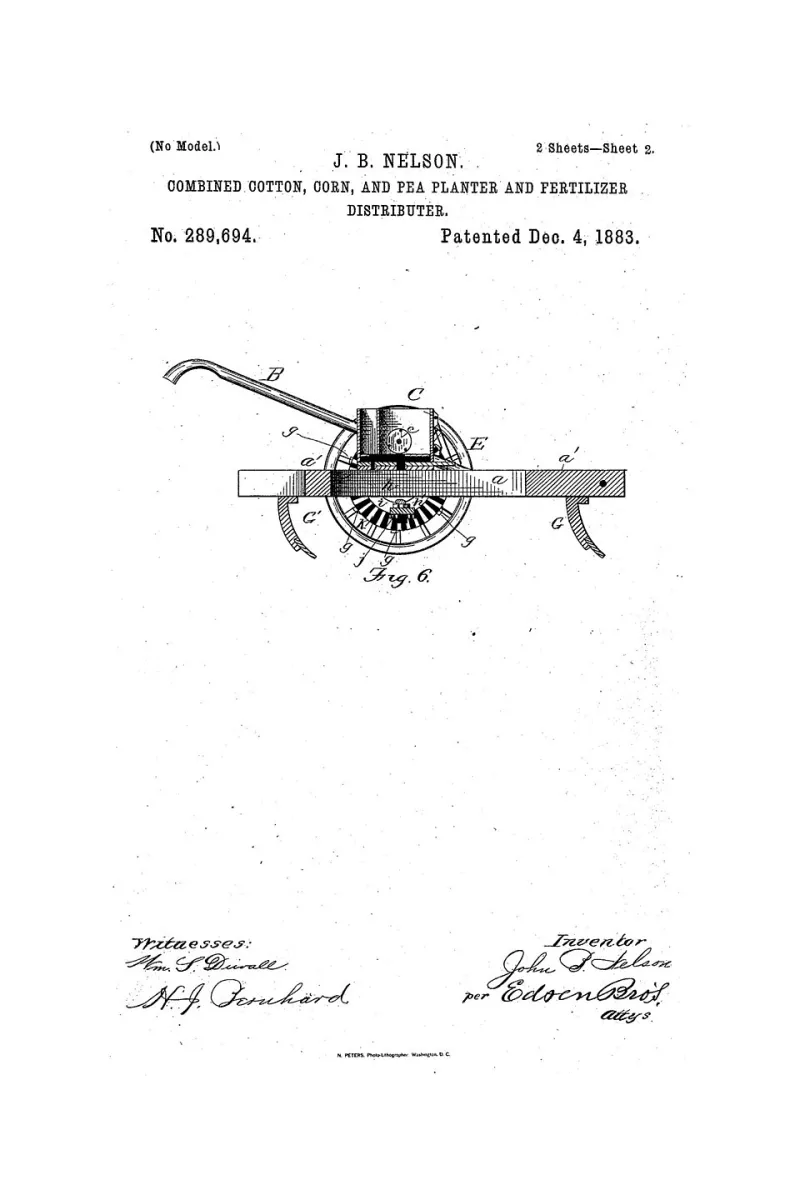
Photo: Nelson, John B, Public domain, via Wikimedia Commons
On a windy afternoon outside Ames, Iowa, a plot combine is chewing through a field trial that looks ordinary from the road. Corn rows. A weigh wagon. A few guys in seed caps squinting at a tablet. What is not ordinary is the fertilizer under the crop: a nano-enabled phosphorus product designed to release nutrients slowly instead of all at once.
The pitch is easy to like. Nutrient runoff is a multi-billion-dollar problem. Fertilizer that stays where it is put could save farmers money, cut algal blooms, and make the Gulf of Mexico hypoxic zone a little less angry. The field trial data is not nothing. Across several Midwest sites, runoff losses in the nano-fertilizer plots have come in lower than conventional treatments, sometimes by 15% to 30%. Yield has been flatter: roughly even to slightly up, with a lot of field-to-field noise.
That is the whole story in two sentences. It is also why farmers are not lining up.
The Field Trial Looks Good. The Field Looks Complicated.
In the Iowa trial, the nano-phosphorus plots held up well in a wet spring. But the neighboring conventional plots did not collapse either, because the farmer who owns the ground is already using variable-rate application, cover crops, and a drainage system that costs more than my first house. The nano product got credit for some of that. It also got blamed when a planter pass went crooked.
The researchers know this. Field trials are noisy. Soils vary. Weather varies. What looks like a precision nutrient delivery system in a small plot can look like an expensive additive in a 160-acre field with a rent payment attached.
The Farmer Math
Ask a corn and soybean farmer in Illinois what would make them switch, and you will not hear 'runoff reduction.' You will hear 'cost per acre' and 'yield bump' and 'can I put it through my existing equipment.'
Nano-fertilizers often cost more per unit of nutrient than conventional blends. The hope is that lower application rates offset the premium. Sometimes they do. Sometimes the recommended rate creeps up because the field response is inconsistent. Then the dealer has to explain why the miracle product costs more and yields the same.
One farmer near Ames told me: 'I don't get paid for the runoff I prevent. I get paid for the bushels I haul.' That is not cynicism. It is accounting.
The USDA Incentive Puzzle
There are programs that could help. EQIP and CSP can cost-share nutrient management practices. But the paperwork is real, the payment rates do not always match the retail price of a new product, and the approval timeline can outlast the planting window. Farmers who are already enrolled in conservation programs are the likeliest early adopters. Everyone else is waiting for the neighbor to try it first.
There is also a credibility problem. Nano-fertilizer marketing sometimes sounds like it was written by a venture capitalist who has never smelled anhydrous ammonia. Farmers have seen wonder products before. They remember the ones that clogged a sprayer or disappeared from the dealer shelf after two seasons.
The Agribusiness Choke Point
Even if the agronomy holds up, the distribution system is not built for it. Fertilizer dealers blend, store, and spread in bulk. A nano-enabled product that needs special handling, separate tanks, or a new calibration routine is a headache for a business running on thin margins and tight spring windows. Agribusiness will move when the product is easy to slot into existing logistics, not before.
That is the gap between a lab result and 200 million acres of cropland. It is not a science gap. It is a retail, equipment, and risk-transfer gap.
So Is It Hype?
Not exactly. The runoff data is promising enough to keep the trials funded. The yield data is honest enough to keep the hype in check. Nano-fertilizers may become a useful tool on high-risk fields, in sensitive watersheds, or on farms already deep into precision ag.
But the Corn Belt does not switch because a product is clever. It switches when the economics are boring and repeatable. Right now, nano-fertilizers are still interesting. That is a compliment. It is also a warning.