Dead on Arrival: The Brutal Economics Killing Nanotech Startups Before They Ever Scale

Photo: abandoned startup office empty whiteboard technology, via thumbs.dreamstime.com
Somewhere in a storage unit outside of Austin, there are boxes of carbon nanotube samples, pitch decks, and FDA pre-submission letters that represent about six years of one founder's life. Marcus Chen (not his real name) doesn't talk about his company much anymore. "We had the science," he told us over the phone. "We genuinely had something real. And it still didn't matter."
His story isn't unusual. Depending on which industry analyst you talk to, somewhere between 85 and 92 percent of nanotech startups never reach meaningful commercial scale. That's not just a bad batting average — it's a structural problem that's quietly hollowing out one of the most promising technology sectors in the country.
So what's actually killing these companies? It's more complicated than "the science didn't work" or "they ran out of money." The real answer involves a collision of forces that most founders don't see coming until it's already too late.
The Valley of Death Has a Nano-Scale Version, and It's Deeper
Every hardware startup faces what the venture world calls the "valley of death" — that brutal stretch between proof-of-concept and actual revenue. For nanotech, that valley is wider, deeper, and a lot less forgiving.
"The timelines are just fundamentally different," says Dr. Priya Anand, a materials science researcher who has consulted for several early-stage nano companies. "A software startup can iterate in weeks. A nanotech startup might need three years just to figure out if their synthesis process is reproducible at scale. Investors aren't built for that."
The numbers back her up. The average time from founding to first commercial product in the nanotech space runs somewhere between seven and twelve years, according to data compiled by the National Nanotechnology Initiative. Meanwhile, most early-stage venture funds operate on a ten-year lifecycle — which means the clock is already ticking before a founder has even hired their first engineer.
This mismatch isn't just inconvenient. It's existential. Founders end up spending enormous energy managing investor expectations rather than solving technical problems, and that distraction has a cost.
The "We'll Figure Out Manufacturing Later" Trap
Talk to enough failed nanotech founders and a pattern emerges pretty quickly. They nailed the lab work. They got the publications. They raised a seed round on the strength of a compelling demo. And then they hit manufacturing — and everything fell apart.
"We could make our nanoparticles work beautifully in a controlled environment," said one former CEO of a drug delivery startup that shut down in 2022. "The moment we tried to move to contract manufacturing, we realized nobody in the country had the equipment to do what we needed at the volume we needed it. We were essentially asking a factory to be built from scratch for us."
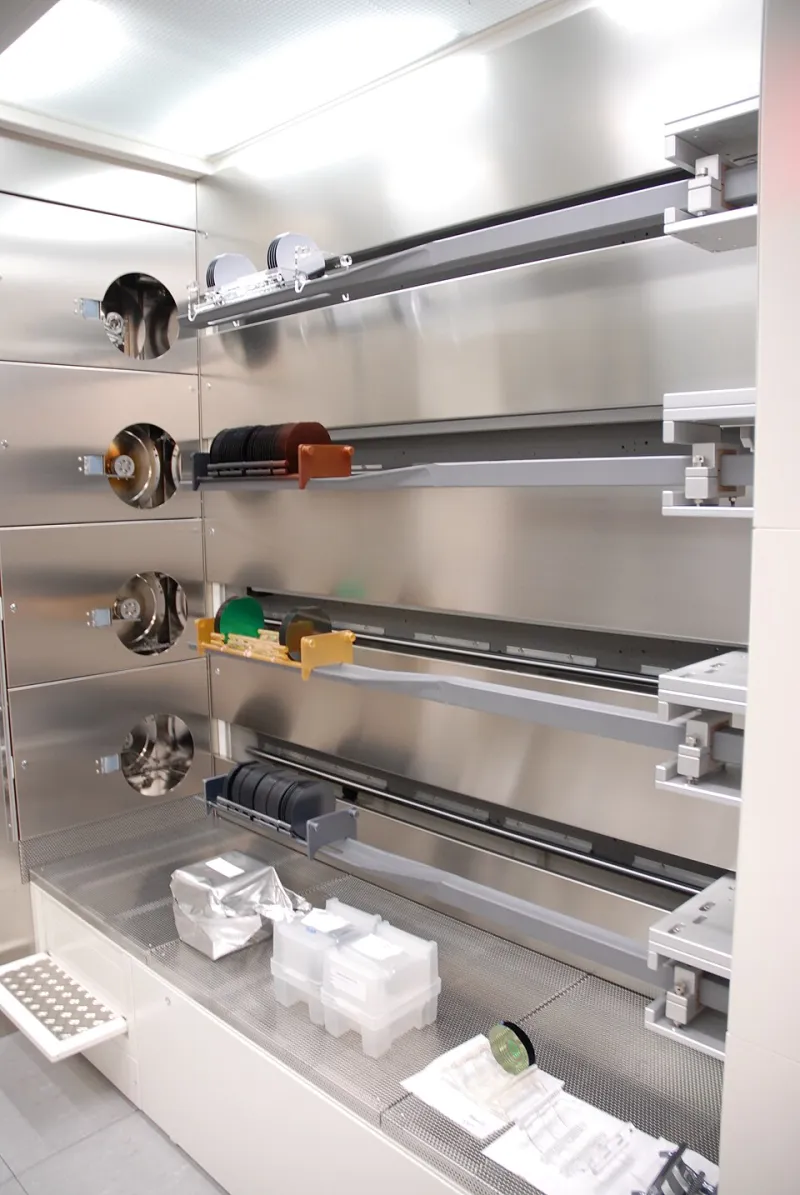
This is one of the most underappreciated bottlenecks in the industry. The infrastructure gap between research-grade nanomaterial production and industrial-scale manufacturing is enormous, and it doesn't get talked about enough in founder communities. Cleanroom time is expensive. Specialized equipment is scarce. And the handful of contract manufacturers who can work at nano-scale are often backlogged for months.
Some founders try to build their own manufacturing capability in-house. That's even more expensive, and it turns a science company into a capital equipment company almost overnight — a completely different beast that requires completely different expertise.
Regulation as a Slow-Motion Cliff
For nanotech companies with medical or food-adjacent applications, the regulatory environment adds another layer of complexity that can quietly drain a startup's runway before anyone realizes what's happening.
The FDA has been developing its approach to nanomaterials for over a decade, but the framework is still evolving. That ambiguity is a double-edged sword. On one hand, it means there's no hard "no" to stop you. On the other hand, it means you're navigating in the dark, often spending hundreds of thousands of dollars on regulatory consultants just to get preliminary guidance.
"We burned through almost two million dollars in regulatory prep before we ever submitted anything," said one founder whose nanoparticle-based sunscreen additive company folded in 2021. "And at the end of it, we still didn't have a clear answer on whether our product would get through. That uncertainty is what killed us, not the science."
The Startups That Are Actually Making It
It's not all grim. A small but meaningful cohort of nanotech companies has figured out how to navigate these traps — and their survival strategies offer some real lessons.
The pattern among survivors tends to look similar: they found near-term revenue streams that didn't require full commercial scale. They partnered with established industrial players early, trading some equity and control for manufacturing infrastructure and market access. And critically, they were honest with themselves about their timelines.
NanoViricides, a Connecticut-based antiviral drug developer, has stayed alive through a combination of government grants, strategic partnerships, and a relentless focus on a single application rather than trying to be everything at once. It's not a glamorous strategy, but it works.
Some founders are also getting smarter about choosing markets. Rather than targeting consumer applications that require FDA approval and mass manufacturing, they're going after industrial and B2B use cases — specialty coatings, semiconductor materials, filtration systems — where the sales cycle is faster and the regulatory hurdles are lower.
What the VC World Is Getting Wrong
It would be easy to blame investors for the nanotech graveyard, and some founders certainly do. But the reality is more nuanced. Most VCs aren't avoiding nanotech because they hate science — they're avoiding it because their fund structures genuinely aren't compatible with the timelines involved.
"We need returns in a window that doesn't match where nanotech actually lives," one partner at a Bay Area deep tech fund admitted candidly. "I've passed on companies that I genuinely believed in because I couldn't see the path to liquidity in time."
The funding gap is starting to get some attention. The DOE and DARPA have both expanded grant programs targeting nano-scale materials and manufacturing, and a handful of family offices and patient capital funds have started carving out dedicated nanotech allocations. But it's still nowhere near enough to support the volume of promising startups coming out of university labs every year.
So Is There a Way Through?
Marcus Chen, the founder with the storage unit full of carbon nanotube samples, isn't done with nanotech. He's back at it, this time with a different approach — a narrower application, an industrial customer lined up before he raised a dollar, and a co-founder with a manufacturing background instead of another scientist.
"I learned that the science being real isn't enough," he said. "The business has to be designed around the constraints of the science, not in spite of them. That sounds obvious, but almost nobody does it the first time."
He might be right. The nano startup graveyard is full of real breakthroughs that just ran out of road. The companies that survive aren't necessarily the ones with the best science — they're the ones that figured out the business model before the money ran out.