Your Sandwich Wrapper Has a Nanotech Story. Nobody Has to Tell You About It.
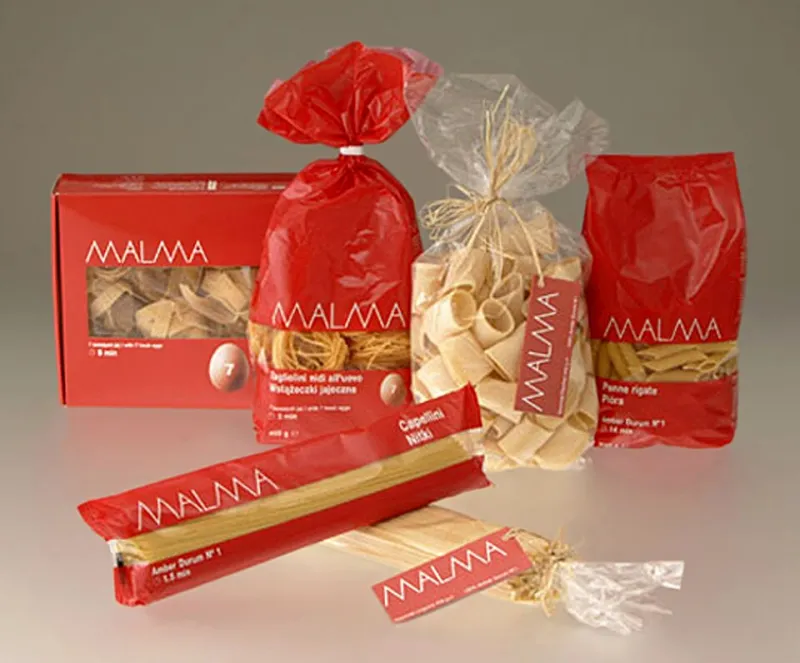
Photo: Designpasta, CC BY-SA 4.0, via Wikimedia Commons
Walk down any grocery aisle and you're surrounded by chemistry doing invisible favors: the oxygen barrier that keeps your sliced turkey pink, the moisture lock that stops your crackers from going soft, the antimicrobial liner that buys a few more days of shelf life. Some of that chemistry now happens at the nanoscale — engineered particles and films measured in billionths of a meter, with surface areas and reactivities that behave nothing like the same material in bulk.
And unless you work in regulatory affairs, you'd never know. No US requirement forces a food package to disclose that engineered nanomaterials are present. There is no line on the label, no symbol, no footnote. That's not a secret being kept from you so much as a system that was never built to say it out loud.
The statute is older than the science
The FDA's authority over food packaging comes from the food additive amendments of the late 1950s, a framework designed around molecules you could name and dose. Materials that touch food are regulated as food contact substances, and the primary pathway is the Food Contact Notification program: a company submits data, the agency reviews it, and the substance clears for use.
Two features of that system matter here. First, the notifications are treated as confidential business information in large part, which is why the public-facing inventory often reads like a list of chemical names without context. Second — and this is the part that gets argued about — the FDA has consistently taken the position that nanoscale versions of materials don't automatically require new review just because of their size. Its guidance says the agency will consider whether a product involves the application of nanotechnology, and that the answer depends on the specific material and use, not on a blanket size threshold.
In plain English: nano isn't a regulatory category in the US food system. It's a characteristic. That distinction is doing a lot of work.
The GRAS end-run
The other door into the food supply is the generally recognized as safe pathway, where a substance can be used without premarket approval if its safety is widely accepted among qualified experts. That pathway has been criticized for years across lots of food ingredients, and nanoscale materials make the criticism sharper. A material can be GRAS in its conventional form; whether the nano version inherits that status is a genuinely contested scientific question, not a settled one.
Critics — including consumer advocacy groups that have petitioned the agency on this exact point — argue that the GRAS route lets nano-ingredients reach shelves without the kind of scrutiny a novel material arguably deserves. Industry counters that the science is often well understood and that the notification process already captures risk data. Both things can be true at once, which is roughly where the policy has sat for a decade.
What actually gets tested
Here's where the technical rubber meets the regulatory road. Testing for a food contact substance typically focuses on migration — how much of the material leaches into food under realistic conditions — and on toxicology of the substance itself. Those are reasonable questions.
They are not the same as the questions nanotoxicology raises. Particle size distribution shifts during processing. Particles can migrate in forms the bulk material never does. The toxicological profile of a nanoparticle can differ from the same chemistry in larger chunks, sometimes substantially. And the analytical methods for detecting and characterizing nanoparticles in a food matrix are still uneven from lab to lab — a measurement problem that shows up all over the nanotech world and hits especially hard in a matrix as messy as food.
So the honest summary is this: the system asks the right kinds of questions, but it asks them with tools calibrated for a different era of materials, and it doesn't always get the nano-specific answers because the methods to produce them consistently aren't there yet.
Why companies aren't rushing to volunteer
You might think a food company would advertise nano-enabled packaging as a freshness breakthrough. Mostly, they don't, and the calculus is easy to follow. Adding a nano disclosure invites scrutiny from retailers, NGOs, and state legislators without adding a single dollar of perceived consumer value. Most shoppers don't want their sandwich bag to sound like a science project. Silence is cheaper.
That silence has a cost, though, and it's a trust cost. The EU has moved toward explicit labeling requirements for nanomaterials in certain product categories; the US has not, and there's no serious federal momentum to change that right now. Meanwhile, a small number of states have started poking at ingredient disclosure more broadly, which means the patchwork risk is real for anyone formulating a national product line.
What to watch next
The pressure point isn't going to be packaging. It's going to be nano-enabled food tech that makes health claims — encapsulated nutrients, delivery systems designed to improve absorption, sensor-integrated smart packaging that reports spoilage. The moment a nanomaterial is doing something a consumer is told to care about, the labeling question stops being abstract. You can't market a benefit and keep the mechanism in a footnote forever.
For now, shoppers who want to know have almost no consumer-facing tools. The best available option is to follow the FDA's published inventory of food contact notifications, which is public but written for regulatory professionals, and to pay attention to advocacy groups that track the space.
Which is, frankly, a lousy answer. A regulatory framework that requires a chemistry degree and a spare afternoon to navigate isn't disclosure — it's a technicality. The nanotech is already in the wrapper. The information just isn't.