Your Degree Is a Starting Line, Not a Finish Line: The Hidden Skill Gaps Eating Nanotech Alive

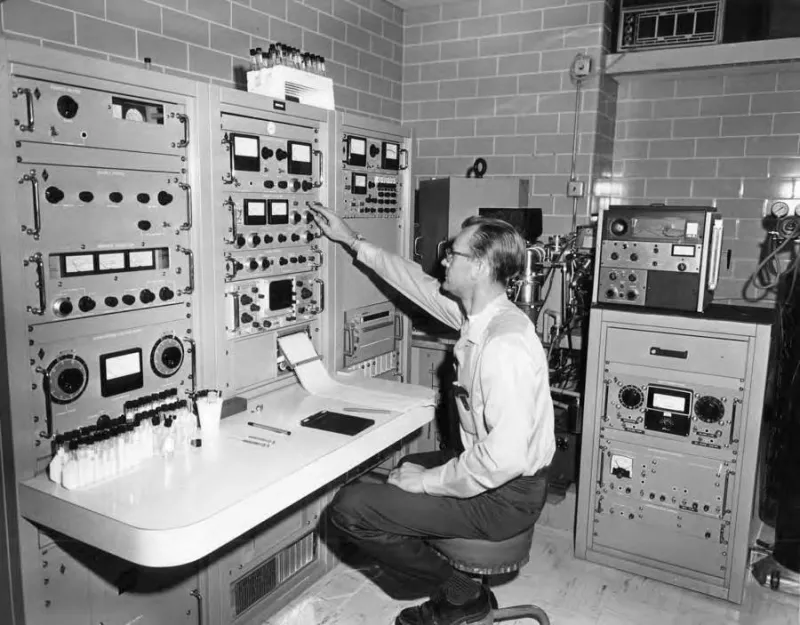
Photo: Smcbuet~commonswiki, CC BY-SA 4.0, via Wikimedia Commons
The Resume Looks Great. The Interview? Not So Much.
Here's a scenario that's becoming way too common at nanotech companies across the US: a candidate walks in with a PhD from a respectable research university, solid publications, and a dissertation that sounds genuinely impressive. Then someone asks them to walk through a quantum simulation workflow in COMSOL or explain how they'd diagnose a drift problem on an atomic force microscope — and things get quiet.
It's not that these candidates aren't smart. They are. The problem is that the skills nanotech companies actually need right now exist in a weird no-man's-land between what academia teaches and what the industry demands. And that gap is getting harder to ignore.
"We stopped assuming a PhD means job-ready about three years ago," said one hiring manager at a nanomaterials startup outside Boston who asked not to be named. "Now we basically have to figure out what they actually know how to do."
What Companies Are Actually Asking For
So what does "job-ready" look like in nanotech right now? Depending on the role, it's a pretty specific list — and a lot of it isn't showing up in standard graduate curricula.
Atomic force microscopy is probably the most talked-about example. AFM is everywhere in nanotech: characterizing surface morphology, measuring mechanical properties at the nanoscale, validating fabrication processes. The machines are finicky, the data interpretation is nuanced, and hands-on troubleshooting experience is genuinely hard to fake. Yet most grad students get maybe a semester of supervised instrument time before they're expected to function independently. That's not enough.
Quantum simulation software is another pressure point. Tools like VASP, Quantum ESPRESSO, and even newer platforms built on Python-based frameworks have become standard in materials research and device development. But learning to actually use them — not just run pre-configured scripts, but understand what you're modeling and why — takes time that structured coursework rarely provides. A lot of researchers graduate knowing of these tools without being fluent in them.
And then there's the data side of things. Nanotech generates enormous volumes of characterization data — spectroscopy outputs, microscopy images, simulation results — and companies increasingly want people who can work with that data programmatically. Python is table stakes at this point. Experience with machine learning frameworks applied to materials data is becoming a real differentiator. Most physics programs don't go near this territory.
Why Universities Haven't Caught Up
This isn't really anyone's fault, which makes it kind of frustrating. Universities move slowly by design. Curriculum changes go through committees, faculty expertise takes years to develop, and specialized equipment is expensive to acquire and maintain. A research university that's just now building out its AFM training infrastructure isn't behind because it's lazy — it's behind because that's just how institutional timelines work.
There's also a structural mismatch in incentives. Graduate programs are optimized to produce researchers, not industry hires. A professor's success metrics are publications and grant funding, not whether their students can hit the ground running at a startup in Albuquerque. That's not a criticism; it's just a different mission.
The result is that a lot of genuinely talented scientists are entering the workforce with strong theoretical foundations and real research chops — but missing the specific, practical, sometimes unglamorous technical competencies that companies need on day one.
How People Are Actually Filling the Gaps
The good news is that people are figuring it out — just not through official channels.
Online communities have become a surprisingly serious resource. Forums and Discord servers dedicated to specific instruments or simulation platforms have evolved into something close to informal apprenticeship networks. Someone posts a weird artifact in their AFM data, three people with real-world experience weigh in, and suddenly you've learned something that isn't in any textbook. NanoChan's own community threads see this kind of knowledge-sharing regularly — it's one of the more underrated parts of what happens here.
Bootcamp-style intensive workshops are also gaining traction. Organizations like the National Nanotechnology Coordinated Infrastructure (NNCI) run hands-on training programs at facilities around the country, and a growing number of private providers are filling in around the edges. These aren't cheap, but for someone trying to make themselves more competitive, a week of intensive AFM or cleanroom training can genuinely move the needle.
Peer learning inside companies is probably the most underrated pipeline. Some of the best-equipped nanotech hires right now are people who landed entry-level positions, paid attention, and built skills through sheer proximity to working practitioners. It's not glamorous, but it works — and a lot of hiring managers know it.
"Honestly, some of our best people came in knowing maybe 60 percent of what we needed and learned the rest in the first year," said a process engineer at a semiconductor-adjacent nanotech firm in Arizona. "What we're really hiring for is whether someone can actually learn."
The Self-Taught Nanotech Engineer Is a Real Thing Now
There's a broader cultural shift happening here that's worth naming. The idea of the self-taught engineer — long celebrated in software — is starting to take hold in deep tech fields where it previously seemed impossible. Nanotech isn't software; you can't spin up a quantum dot in a browser. But the learning layer is becoming more accessible than it's ever been.
YouTube channels run by working researchers, open-source simulation tools with active developer communities, GitHub repos full of characterization data analysis scripts — the raw material for building real skills is out there. What it takes is the initiative to go find it and the discipline to actually work through it.
For people currently in grad school or early in their careers, the practical implication is pretty clear: don't assume your degree is doing all the work. Find the tools your target industry actually uses, get your hands on them however you can, and build a portfolio that shows you know what you're doing — not just that you studied adjacent topics.
What Needs to Change Structurally
Longer term, this is a problem the education system needs to take more seriously. A few universities are experimenting with industry-embedded curriculum tracks and co-op programs that put students in working nanotech environments earlier. That's the right direction.
Federal investment in nanotech workforce development — part of what's been filtering through programs tied to the CHIPS Act and related initiatives — is starting to reach training infrastructure, not just research facilities. More of that money needs to flow toward the practical skills layer, not just equipment acquisition.
And companies themselves have a role to play. The ones that build real onboarding and internal training infrastructure will have a recruiting advantage. Expecting every hire to arrive fully formed is a losing strategy when the talent pool is this thin.
The gap between what schools teach and what nanotech actually needs isn't going to close overnight. But the people who figure out how to bridge it themselves — through communities, workshops, peer networks, and a willingness to get their hands dirty — are going to have a serious edge. In a field where everyone's competing for the same small pool of qualified candidates, that matters a lot.