The Incredible Shrinking Breakthrough: Why Nanotech's Best Lab Results Vanish at Scale
Picture this: a research team at a well-funded university lab publishes a paper showing their new nanoparticle formulation delivers cancer-fighting drugs with stunning precision. The press release goes out. Tech blogs run with it. A startup forms. Investors pile in.
Then the manufacturing engineers get involved — and the whole thing quietly falls apart.
This isn't a rare horror story. It's practically a rite of passage in nanotech. The gap between a jaw-dropping proof-of-concept and a product you can actually make, sell, and ship at volume has a name in the industry: the valley of death. And in nanotechnology, that valley is wider, deeper, and more treacherous than almost anywhere else in advanced manufacturing.
So what's actually going on? Why does scaling up feel less like engineering and more like trying to repeat a magic trick you only half understood the first time?
When Small Changes Everything
Here's the core problem: at the nanoscale, the rules change. Surface area-to-volume ratios skyrocket. Quantum effects start mattering in ways they simply don't at larger scales. And the environmental variables that a careful grad student can control in a 50-milliliter batch — temperature gradients, contamination, humidity, even vibration — become exponentially harder to manage when you're trying to produce kilograms of the stuff.
"In the lab, you're basically doing surgery with tweezers," says one materials scientist who spent years trying to commercialize a graphene-based sensor technology before the startup folded. "At scale, you're trying to do the same surgery with oven mitts on, in a room full of people, while someone keeps adjusting the thermostat."
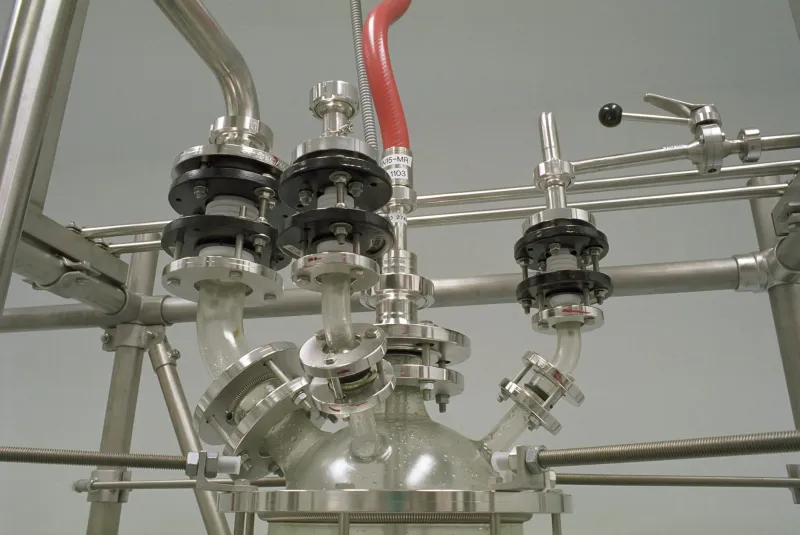
The physics isn't being stubborn for no reason. Nanoparticle synthesis, for instance, is exquisitely sensitive to nucleation conditions — the precise moment when atoms or molecules start clustering into particles. In a small batch, you can achieve something close to uniform conditions throughout the reaction vessel. Scale that up to a production reactor and you've got thermal gradients, flow dynamics, and concentration differentials that are nearly impossible to eliminate. The result? A size distribution that looked tight and controlled in the lab suddenly looks like a histogram of chaos.
The Characterization Trap
There's another layer to this problem that doesn't get talked about enough: how researchers measure success in the first place.
Most nanotech papers report results from the best-performing samples in a batch — the ones that worked. That's not dishonesty, exactly. It's just how science has historically been done. But it creates a deeply misleading picture of what a manufacturing process will actually produce at scale, where you're stuck with the average, not the highlight reel.
"We'd look at a paper showing 95% efficiency on a quantum dot device and think, okay, we can work with that," recalls a process engineer who's worked at two different nanotech startups in the Midwest. "Then you realize the 95% number came from, like, twelve hand-picked devices out of a batch of two hundred. The real yield was closer to 30%. That's not a product. That's a lottery ticket."
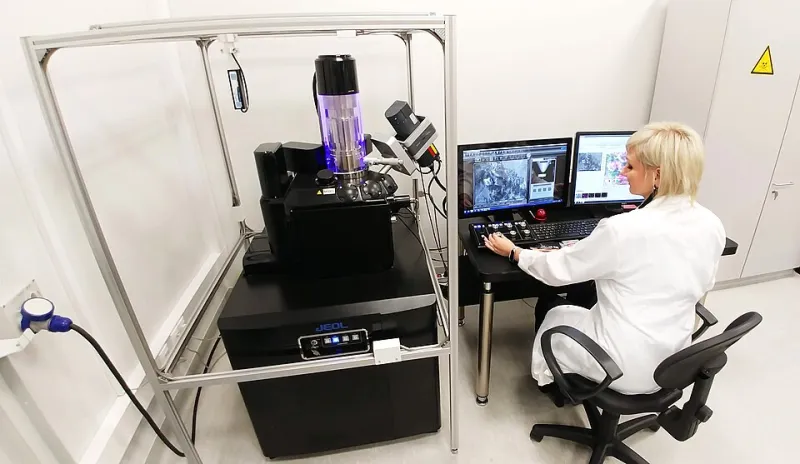
The metrology problem runs deep here. Characterizing nanomaterials at research scale often relies on instruments — high-resolution electron microscopes, atomic force microscopes, synchrotron beamlines — that simply aren't available inline during manufacturing. You can't pause a production line to run every batch through a transmission electron microscope. So manufacturers are often flying partially blind, relying on proxy measurements that correlate imperfectly with the properties that actually matter.
The Economics Make It Worse
Even when teams crack the physics, the economics of scale-up can still kill a promising technology stone dead.
Nanotech manufacturing often requires ultra-clean environments, specialized precursor chemicals, and equipment that doesn't have a large installed base — meaning spare parts are expensive, maintenance expertise is scarce, and any downtime hits hard. The precursor materials themselves are frequently synthesized in tiny quantities for research purposes, and the price per gram drops glacially as demand grows. You can't just call up a chemical distributor and order a drum of your exotic nanomaterial at research-grade purity.
Then there's the regulatory dimension. Novel nanomaterials intended for medical or food applications face an FDA review process that was largely designed for conventional chemicals and biologics. The agency is still developing frameworks for evaluating nanoparticle safety at scale, which means startups can burn through years and millions of dollars in a regulatory gray zone before getting any definitive answers.
"You're essentially paying to educate the regulator while your runway shrinks," says one founder who navigated — barely — an FDA pre-submission process for a nanoparticle drug delivery system. "That's not a complaint about the FDA. It's just the reality of being early in a field where the rules are still being written."
The Talent Gap Nobody Talks About
Scale-up also exposes a structural problem in how nanotech talent gets trained. The people who are best at pushing the science forward in academic labs often have minimal exposure to manufacturing process development. And the process engineers who know how to run a production floor typically haven't spent time thinking about quantum confinement effects or surface ligand chemistry.
Bridging that gap requires a rare hybrid skill set — someone who understands both why a nanoparticle behaves the way it does and how to translate that understanding into a reproducible, controllable industrial process. Those people exist, but there aren't nearly enough of them, and the big semiconductor and pharma companies tend to vacuum them up before nanotech startups get a shot.
Is There a Way Out?
Some researchers and companies are starting to attack the valley of death more systematically. Design-of-experiment approaches borrowed from pharmaceutical manufacturing are being applied earlier in the R&D process, so that scale sensitivity gets stress-tested before a startup burns through its Series A. Continuous flow synthesis — where reactions happen in a controlled stream rather than a batch vessel — is showing real promise for producing more uniform nanomaterials at higher volumes.
On the characterization side, machine learning models trained on large datasets of nanoparticle synthesis runs are starting to help predict which process parameters matter most, and how they'll behave as conditions change. It's not a silver bullet, but it's better than the current approach, which sometimes amounts to expensive trial and error.
And there's a growing push — still modest, but real — for academic researchers to publish yield distributions and batch-to-batch variability data alongside their headline results. If the field is serious about commercialization, the gap between the best sample and the average sample is information the world needs to see.
The valley of death isn't going away anytime soon. The physics is what it is, and turning a beautiful lab result into a manufacturable product will always require a different kind of rigor than publishing a paper. But understanding why the gap exists is at least the beginning of learning how to cross it — instead of just falling in.