Same Experiment, Different Lab, Totally Different Results: Nanotech's Dirty Little Secret

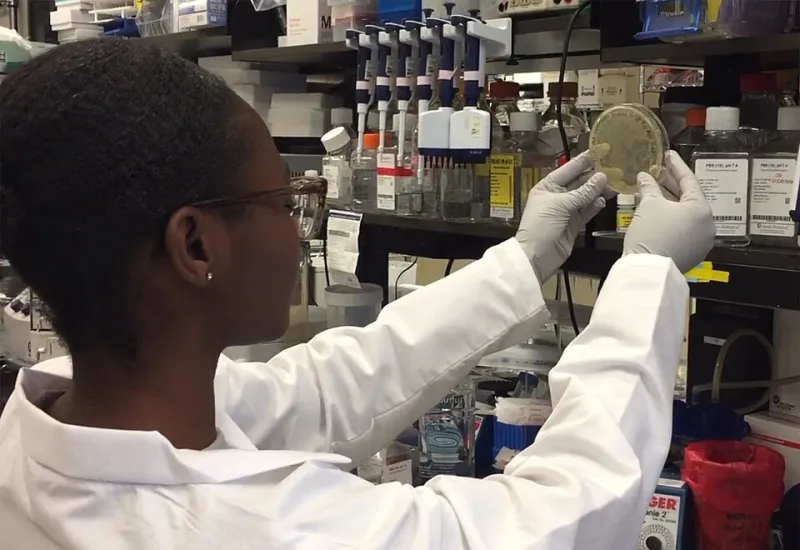
Photo by Photo by Chidera Faustina Okeke on Unsplash on Unsplash
Imagine spending eighteen months perfecting a nanoparticle drug delivery system. Your results are clean, your data is beautiful, and your paper clears peer review without much fuss. Then a lab at a different university tries to replicate your work — and gets something completely different. Not slightly off. Completely different.
This isn't a hypothetical. It happens constantly in nanotechnology research, and most people working in the field will admit it, at least off the record. The nanotech reproducibility crisis is real, it's expensive, and it's starting to look like an existential threat to a field that's already fighting hard to prove it can deliver on decades of enormous promises.
The Problem Is Smaller Than You Think — And That's Exactly the Issue
Reproducibility problems aren't unique to nanotech. Psychology, nutrition science, and even cancer biology have all had their public reckoning with the replication crisis. But nanotechnology has a specific set of conditions that make the problem uniquely stubborn.
At the nanoscale, tiny variations in synthesis conditions — temperature fluctuations of a few degrees, trace contaminants in a solvent, even the age of a reagent batch — can produce materials with wildly different properties. A gold nanoparticle that's 10 nanometers in one lab might behave like a completely different material than one that's 12 nanometers in another, even if both researchers reported nominally identical synthesis procedures.
"The margin for error at this scale is basically nonexistent," says one materials scientist at a Midwest research university who asked not to be named because they didn't want to publicly criticize colleagues. "You can follow a published protocol to the letter and still get something different, because the protocol wasn't written with enough granularity to capture everything that actually matters."
And that's when researchers are trying to replicate. Often, they're not. The incentive structures in academic science don't exactly reward replication studies. Funding agencies want novelty. Journals want first-ever findings. Nobody's handing out grants to confirm someone else's work.
The Equipment Problem Nobody Wants to Admit
Here's where it gets even messier: a lot of nanotech research is conducted on highly specialized, often proprietary equipment, and two machines that technically do the same thing can produce measurably different outputs.
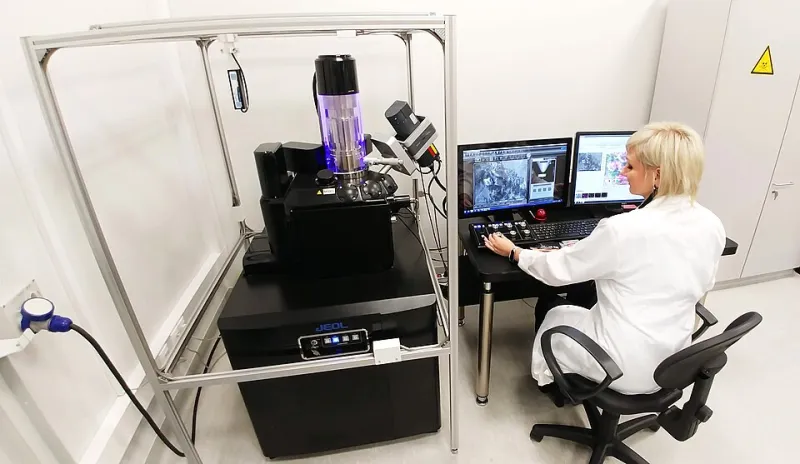
Electron microscopes, atomic force microscopes, dynamic light scattering instruments — these tools are central to characterizing nanomaterials, and they're not all created equal. Calibration standards vary. Software algorithms that interpret raw data differ between manufacturers. A particle size distribution measured on a Malvern instrument might not match one measured on a competing platform, even on the same sample.
"We've had situations where we send the same sample to three different characterization facilities and get three different answers," one lab director at a mid-sized biotech startup told us. "And all three facilities are doing everything right by their own standards. There just aren't universal standards."
This isn't a small inconvenience. When a startup is trying to demonstrate to investors or regulators that their nanomaterial behaves consistently, equipment-dependent variation can be a serious liability. It also means that when a pharmaceutical company tries to license academic research and scale it up, they're sometimes starting from a foundation that was shakier than anyone disclosed.
Where the Standards Actually Stand
To be fair, the field isn't completely flying blind. NIST — the National Institute of Standards and Technology — has been working on reference materials and measurement standards for nanomaterials for years. The ISO has published technical specifications for nanotech characterization. Organizations like the Nanotechnology Characterization Laboratory at Frederick National Lab have done real work on standardizing how nanomaterials used in cancer research get evaluated before clinical testing.
But adoption is inconsistent, and the standards that do exist often lag behind the pace of research. By the time a consensus standard gets developed, tested, and published, the field has frequently moved on to new materials and new techniques that the standard doesn't cover.
"We have standards for some things and basically nothing for others," says a researcher involved with one of these standardization efforts who spoke on background. "Carbon nanotubes have gotten a fair amount of attention. But if you're working on something newer — certain 2D materials, complex lipid nanoparticles, some of the newer MOF structures — you're largely making it up as you go."
The Hidden Costs Are Stacking Up
The real-world consequences of this are more expensive than most people outside the field realize.
Pharmaceutical companies that license nanotech research frequently build in substantial validation budgets specifically because they expect to spend months figuring out why the licensed results don't reproduce in their own facilities. That's money that doesn't go toward actual development. It's a tax on the entire pipeline.
At the academic level, graduate students and postdocs routinely lose months — sometimes years — trying to troubleshoot why their results don't match published literature, not realizing that the published literature itself might be unreliable. That's not just a waste of resources. It's a morale problem in a field that's already struggling to retain talent.
And then there's the credibility issue. When high-profile nanotech results fail to hold up under scrutiny, it feeds a broader skepticism about whether the field can actually deliver. Every overhyped press release about a nanomaterial that cures cancer or makes batteries last forever — followed by years of silence — makes the next legitimate breakthrough harder to fund and harder to believe.
What Would Actually Help
Researchers who've thought seriously about this problem tend to converge on a few practical fixes, none of which are especially glamorous.
First, more granular methods reporting. Journals need to require that synthesis and characterization protocols include enough detail to actually be followed by someone who wasn't in the room. That means specifying equipment models, software versions, environmental conditions, and reagent sources — not just the broad strokes.
Second, shared reference materials. If every lab working on a given class of nanomaterials had access to a certified reference sample with independently verified properties, it would at least give researchers a baseline to calibrate against.
Third, some structural incentive for replication work. Whether that's through dedicated journal sections, specific funding mechanisms, or just a cultural shift in how replication studies are valued, the field needs to make it worth someone's time to check the work.
A handful of initiatives are pushing in this direction. The Materials Research Society has been increasing its focus on data sharing and reproducibility. Some NIH-funded nanotechnology programs now require more rigorous characterization documentation. It's not nothing.
But the pace feels slow relative to the scale of the problem.
The Clock Is Ticking
Nanotech has been in "just a few years away" mode for a long time. Some of that is inevitable — genuinely hard science takes time. But some of it is self-inflicted, the result of a field that has historically prioritized publishing exciting results over ensuring those results are solid enough to build on.
The reproducibility crisis isn't just a scientific housekeeping problem. It's a foundational issue that affects whether nanotech can actually fulfill the enormous potential that researchers, investors, and patients have been promised for decades.
Getting this right isn't as flashy as announcing a new wonder material. But it might be the most important work the field does in the next ten years.