Why Your Favorite Wonder Material Is Probably Still a Lab Curiosity (And May Stay That Way)
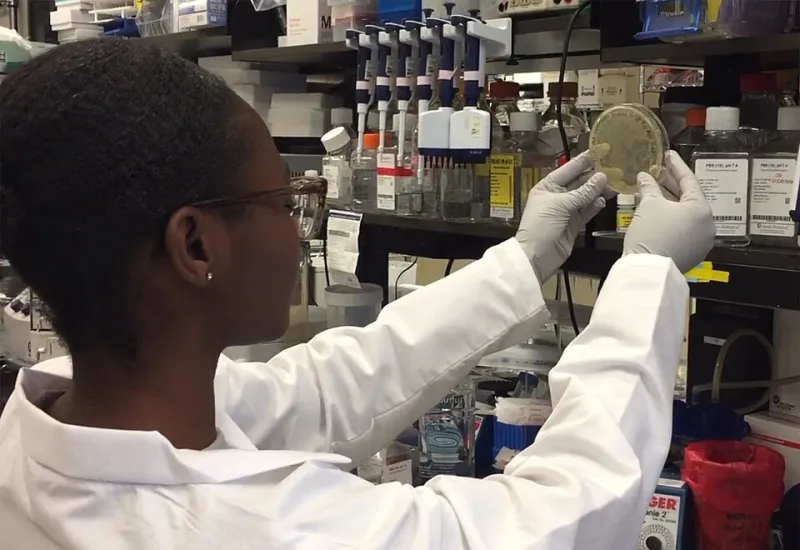
Photo: National Institute of Allergy and Infectious Diseases (NIAID), NIH, Public domain, via Wikimedia Commons
Every few months, a new headline lands promising that some nanoscale material is about to change everything. Graphene will make batteries last forever. Self-healing concrete will end infrastructure decay. Aerogel insulation will replace every wall in America. The tech press runs with it, the funding announcements follow, and then... nothing. A year later, the same breathless coverage appears about the same material, with a slightly different university logo in the press release.
Materials scientists are, to put it mildly, exhausted by this pattern.
"There's this persistent fantasy that if something works at the nanoscale in a controlled environment, scaling it up is just an engineering problem," says Dr. Priya Venkataraman, a materials engineer at a major research university in the Midwest who has spent over a decade studying two-dimensional materials. "But sometimes the physics that makes a material interesting at the nanoscale is exactly what makes it useless at any larger scale. Those aren't separate problems. They're the same problem."
So what actually goes wrong? We dug in.
The Graphene Superconductor Fantasy
Let's start with the big one. Graphene — a single-atom-thick sheet of carbon arranged in a hexagonal lattice — has been "ten years away" from transforming electronics, energy storage, and medicine for going on two decades now. The 2010 Nobel Prize in Physics validated the science. The hype exploded. The commercial applications... largely did not.
The superconductivity angle got particularly loud after a 2018 MIT paper demonstrated that two graphene sheets twisted at a precise "magic angle" of roughly 1.1 degrees could exhibit superconducting behavior. The internet basically lost its mind.
Here's what the internet skipped over: producing graphene at that exact twist angle, consistently, at any meaningful scale, is currently somewhere between extraordinarily difficult and practically impossible. "The tolerance we're talking about is insane," says Marcus Oyelaran, a condensed matter physicist based in Boston. "You're not just aligning two sheets. You're aligning two sheets of a material that doesn't want to stay flat, at a specific rotational angle measured in fractions of a degree, without introducing defects that immediately destroy the property you're trying to exploit. And you need to do that at temperatures near absolute zero. For a consumer product."
The fundamental physics is real. The path from that physics to a product sitting on a Best Buy shelf is not currently visible to anyone.
Self-Healing Concrete and the Durability Illusion
Self-healing concrete is another crowd favorite. The concept is genuinely cool: embed bacteria, microcapsules of healing agents, or nanoparticles into concrete mix, and when cracks form, the material repairs itself. Researchers have demonstrated this in labs. Some pilot projects have used versions of it in construction.
So why isn't every bridge in America built with it?
"Concrete is cheap. Brutally cheap," explains civil engineer and materials researcher Dana Kowalczyk, who consults with infrastructure firms in the Great Lakes region. "When you start adding biological agents or engineered nanoparticles to the mix, you're adding cost, complexity, and variability. And the construction industry is not historically a fast adopter of anything that costs more upfront, even if the lifecycle math looks better."
Beyond the economic friction, there are genuine performance questions. Bacteria-based healing agents need moisture and specific pH conditions to activate. Nanoparticle-based systems can behave unpredictably when mixed with the various chemical cocktails that make up real-world concrete formulations. "The lab batch and the field pour are not the same thing," Kowalczyk says. "Temperature swings, humidity variation, contamination from aggregate sources — all of that affects how these systems perform. We don't have twenty years of field data yet. We have controlled experiments."
The Oxidation Problem Nobody Wants to Talk About
One of the least glamorous but most persistent killers of nanomaterial applications is oxidation. Nanoscale materials have enormous surface-area-to-volume ratios compared to their bulk counterparts — that's often the source of their interesting properties. It's also why they react aggressively with oxygen and moisture.
"Quantum dots are a perfect example," says Venkataraman. "You can engineer a quantum dot with incredible optical properties. Beautiful, tunable emission spectra. Then you expose it to air and water, which is the condition under which most devices actually operate, and those properties degrade. Sometimes quickly. The surface chemistry is everything, and protecting that surface without destroying the property you care about is a genuine unsolved problem in a lot of cases."
This isn't a funding problem or a manufacturing scale problem. It's a chemistry problem. And chemistry problems don't get solved by press releases.
When the Measurement Is the Product
Another recurring issue: researchers sometimes optimize for what's measurable in a lab setting rather than what matters in deployment. A nanomaterial might demonstrate record-breaking tensile strength in a single-fiber pull test, generating a compelling data point for a paper. But turning that single-fiber result into a woven composite material that retains those properties, can be manufactured consistently, and doesn't catastrophically fail under cyclic loading — that's a completely different challenge.
"The metric that gets you published isn't always the metric that gets you a product," Oyelaran notes. "And there's real pressure in academia to publish, to generate those peak performance numbers. Nobody writes a paper titled 'We Made This Material and It Was Okay Under Realistic Conditions.' But that paper might actually be more useful to industry."
What Actually Has a Shot
None of this means nanomaterials are a dead end. It means the timeline is longer and the path is harder than the hype suggests. Researchers we spoke with were genuinely optimistic about a few areas — not because the problems are solved, but because the gap between lab and application feels more bridgeable.
Nanoparticle-based drug delivery is one. The biological environment is harsh, but pharmaceutical companies have deep pockets, strong regulatory pathways, and a tolerance for iterative development that most industries don't. Progress is slow by tech-sector standards, but it's real and measurable.
Nanocoatings — thin surface treatments that modify how materials interact with water, heat, or light — are another. The applications are narrower and less dramatic than "replace all concrete," but the manufacturing pathway is more tractable and the performance requirements are better defined.
"The materials that are going to make it are probably not the ones getting the biggest headlines," Venkataraman says. "They're the ones where someone identified a specific, well-defined problem, matched a material property to that problem, and then spent ten boring years figuring out how to make it reliably. That's not a great pitch deck. But it's how materials science actually works."
The future is still measured in nanometers around here. We just think you deserve an honest accounting of how far away some of those measurements actually are.