Locked Out at the Nanoscale: How Patent Pileups Are Quietly Crushing Nanotech Innovators
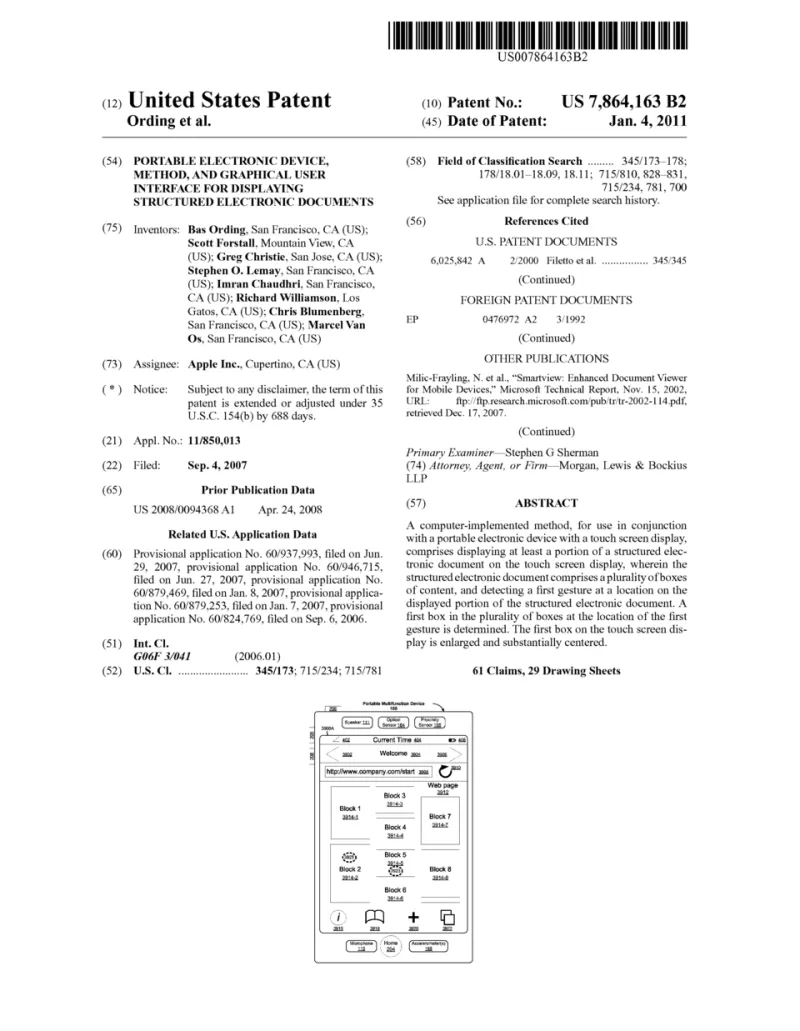
Photo: United States Patent and Trademark Office (USPTO), Public domain, via Wikimedia Commons
Imagine spending three years developing a nanoparticle drug delivery system. You've got a functioning prototype, a co-founder with a chemistry PhD, and a seed round that barely covered the equipment. Then, about six weeks before you're ready to file your own patent, you get a letter. Actually, you get three letters — from three different companies — each claiming you've wandered into their intellectual property.
This isn't a hypothetical. It's essentially what happened to a Boston-area biotech startup that asked us not to use their name while litigation is still technically ongoing. And according to patent attorneys who work in this space, it's not even close to unusual.
"Nanotech has one of the worst patent density problems of any emerging technology sector," says one IP attorney who's represented both startups and large research institutions. "You've got universities, federal labs, and corporations all filing aggressively on foundational concepts — often concepts that are so broad they could theoretically cover entire categories of future innovation."
Welcome to the nanotech patent thicket. It's invisible, it's expensive to navigate, and it might already contain your best idea.
What a Patent Thicket Actually Looks Like
The term "patent thicket" isn't new — economists and legal scholars have been writing about it in semiconductors and biotech for decades. But nanotech has some features that make it particularly brutal.
For one, the field is inherently interdisciplinary. A single nanoparticle-based cancer therapy might sit at the intersection of materials science, pharmaceutical chemistry, biomedical engineering, and surface physics. Each of those domains has its own patent ecosystem, often developed independently by institutions that had no idea their work would eventually converge.
The result is overlapping coverage on fundamental processes. We're not talking about minor technical variations here — we're talking about situations where three different entities hold patents on what is, in practical terms, the same basic mechanism, just described using slightly different language or filed in different years.
The US Patent and Trademark Office hasn't exactly helped matters. During the early 2000s nanotech boom, the USPTO was processing nano-related applications with limited technical expertise in the field. Some critics argue that overly broad patents were approved simply because examiners lacked the background to push back effectively. Those patents are still active. Some of them are still being enforced.
The Foundational vs. Practical Problem
One of the murkiest fault lines in nanotech IP runs between foundational research and practical application. Universities and federal research labs — think MIT, Caltech, Stanford, national labs funded by the DOE — have been filing patents on basic nano phenomena for thirty-plus years. That was partly the intent: the Bayh-Dole Act of 1980 encouraged universities to patent federally funded research so it could be licensed to the private sector and actually make it to market.
In theory, that's a reasonable pipeline. In practice, it created a situation where foundational concepts — things like the basic behavior of quantum dots or carbon nanotube synthesis methods — are locked behind licensing agreements that startups often can't afford.
"You can license the technology, sure," explains one founder who's building in the nano-sensor space. "But when you're a five-person company with $800K in the bank, a licensing fee plus royalties can be existential. And if you need to license from four different institutions just to operate? You're done before you start."
Larger companies, of course, have legal teams that can negotiate these arrangements — or simply acquire the patents outright. Which means the thicket doesn't just slow innovation; it structurally advantages incumbents over scrappy newcomers. That's a problem if you believe, as many in this community do, that the most disruptive nanotech breakthroughs are going to come from outside the established players.
Real Damage, Real Startups
The Boston case mentioned earlier isn't an outlier. A nanomaterials company in Colorado spent north of $400,000 in legal fees defending against patent claims from a university tech transfer office — and ultimately settled by agreeing to licensing terms that cut their margins to the point where the product line became commercially unviable. They pivoted. Most of their original team left.
Another founder, based in the Research Triangle area of North Carolina, described discovering mid-development that a method central to her company's manufacturing process was covered by a patent held by a Japanese electronics conglomerate. The patent had been filed years earlier as part of a broad IP portfolio sweep — the company had never actually commercialized the method and had no apparent plans to do so. Still, the licensing ask was real.
"It felt like a toll booth that existed just to exist," she told us. "Nobody was using this. Nobody was building anything with it. But we still had to pay to pass through."
This is what patent attorneys sometimes call a "blocking patent" — IP held not for active use but as a defensive or revenue-generating asset. In nanotech, these are surprisingly common, particularly among large corporations and universities that filed aggressively during the 2000s without a clear commercialization roadmap.
Does the System Even Work?
Here's where it gets philosophically complicated: patents are supposed to encourage innovation by giving inventors a temporary monopoly in exchange for public disclosure. The idea is that disclosure accelerates collective knowledge while the monopoly period rewards the risk of invention.
In nanotech, that logic is breaking down on both ends. Disclosure happens — patents are public — but the sheer volume and complexity of filings means most startups don't have the resources to do comprehensive freedom-to-operate searches before building. And the monopoly reward increasingly flows not to the original inventors, who may have been grad students or postdocs, but to institutions and IP holding companies that acquired the rights.
"The system wasn't designed for a field this technically dense," says the IP attorney we spoke with. "When you can have legitimate disagreements among PhDs about whether two patents cover the same underlying phenomenon, you have a system that's functioning as a tax on innovation rather than a reward for it."
Some researchers have proposed solutions: compulsory licensing for foundational nano processes, patent pools modeled on what the wireless industry did with 4G standards, or USPTO reforms that require narrower claim language in nano applications. None of these have gained serious legislative traction.
Navigating the Thicket Without Getting Shredded
For founders who are already building, the practical advice from attorneys is consistent, if not cheap: do your freedom-to-operate research early, not late. Before you've sunk significant capital into a specific approach, spend the money on a proper patent landscape analysis. It won't catch everything — the thicket is genuinely too dense for that — but it can at least tell you which areas carry the highest litigation risk.
Building relationships with university tech transfer offices before you need them is also worth the effort. Some institutions are more founder-friendly than others, and early conversations can sometimes lead to more reasonable licensing arrangements than you'd get after a cease-and-desist.
And document everything. If you genuinely developed something independently, your lab notebooks, commit histories, and timestamped records matter.
None of this is a guarantee. The nanotech patent landscape is, at this point, dense enough that almost any meaningful innovation is going to brush up against someone else's IP. The question is whether you find out early enough to adapt — or whether you find out after you've already built the thing.
The future might be measured in nanometers here at NanoChan, but the barriers to that future are often measured in legal fees. And right now, for a lot of brilliant founders, that math doesn't add up.