Brilliant Science, Broken Business: Why Nanotech Startups Keep Dying on the Factory Floor

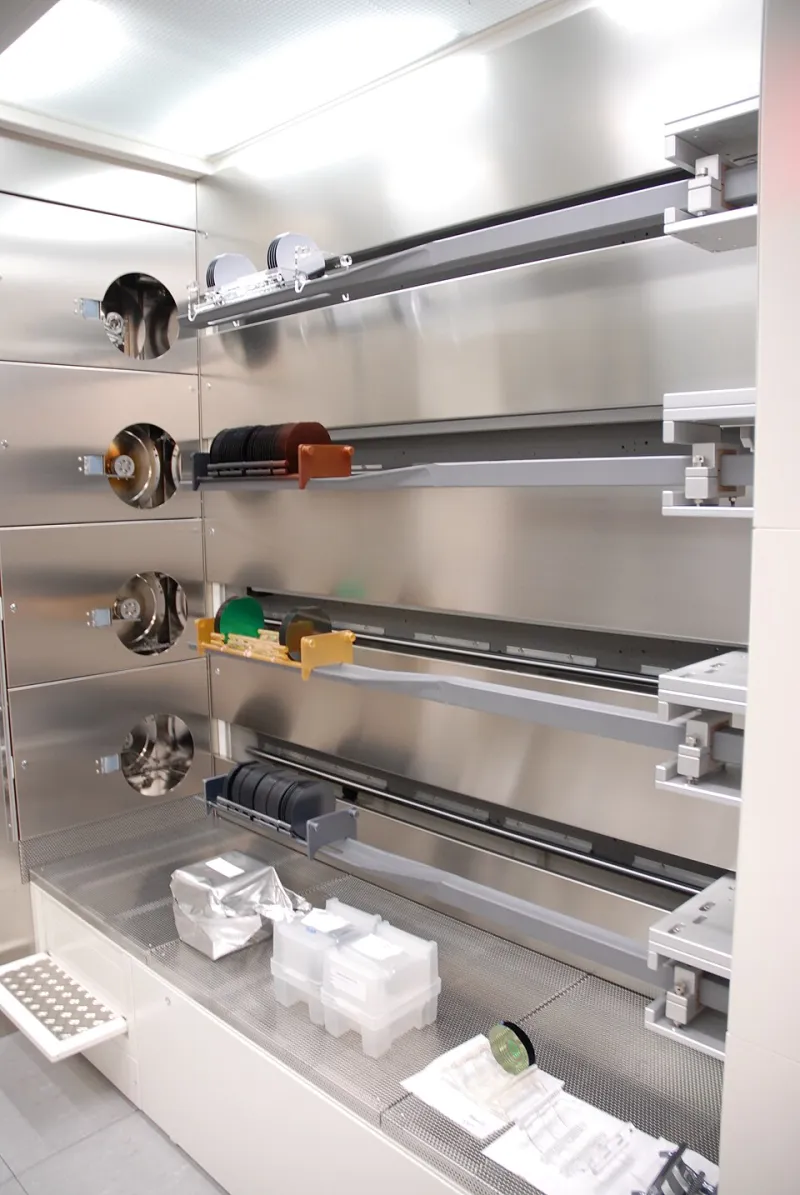
Photo: New World Order - Aveiro Branch from Portugal, CC BY 2.0, via Wikimedia Commons
There's a graveyard most venture capitalists don't like to talk about. It's not full of bad ideas or lazy founders. It's full of genuinely impressive science — peer-reviewed, award-winning, breathlessly covered in trade publications — that simply couldn't survive contact with a production line.
Nanotech's manufacturing scale problem isn't new, but it keeps claiming victims. And the pattern is almost always the same: a startup nails its prototype, raises a serious Series A or B, hires a team, and then spends the next two years slowly realizing that what worked in a cleanroom at 10 grams per batch absolutely refuses to work at 10 kilograms per run. By the time the investors figure it out, the runway is gone.
We looked at a handful of companies that went through exactly this. The names aren't always household words — nanotech rarely produces those — but the lessons they left behind are worth paying attention to.
The Yield Trap
One of the most common killers is what engineers in the space have started calling the yield trap. A startup demonstrates a nanomaterial or nanodevice with exceptional performance metrics. The demo works. The investor deck looks incredible. But the process that produced those results had an actual yield of maybe 15 or 20 percent — meaning 80 cents of every dollar in materials and energy was producing waste.
In a research context, that's fine. You cherry-pick your best samples for characterization. Nobody's counting the rejects.
In manufacturing, that math is catastrophic.
Novalia, a UK-originated printed electronics company that had significant US operations and backing, ran into exactly this wall. Their conductive nanomaterial inks showed remarkable performance in demos but couldn't be produced consistently at volume. The variance between batches was wide enough that customers couldn't depend on the product. They pivoted repeatedly, burned through capital, and eventually wound down their nanotech ambitions entirely. The core problem wasn't the chemistry — it was that the chemistry had never been stress-tested against the brutal consistency requirements of real manufacturing.
When the Equipment Doesn't Exist Yet
Another startup, Nantero, spent years developing carbon nanotube-based memory — NRAM — that genuinely outperformed conventional flash on several metrics. The science was solid enough to attract major semiconductor interest. But their path to production kept running into a wall that's unique to nanotech: sometimes the manufacturing equipment you need simply hasn't been invented yet.
Nantero needed deposition tools and process controls capable of handling carbon nanotubes at semiconductor fab tolerances. The tools that existed were either too imprecise or required so much custom engineering that the cost of productizing them ate the margin out of the business model. They survived longer than most — and eventually found a licensing path — but the timeline stretched so far beyond original projections that it effectively killed the original company vision.
This is a trap that catches a lot of founders who come from research backgrounds. In a university lab, you build or modify your own tools. You tweak the process to fit the equipment. In manufacturing, you need equipment vendors, supply chains, calibration standards, and process engineers who've run those machines for a decade. If that ecosystem doesn't exist for your specific nanomaterial or nanoprocess, you're not just building a product — you're building an entire industry vertical from scratch. Most startups don't have the capital or the timeline for that.
The Contamination Problem Nobody Budgeted For
Nanotech manufacturing is extraordinarily sensitive to contamination. At the nanoscale, a particle that would be invisible to the naked eye can wreck an entire production run. Several startups that looked viable on paper collapsed because they underestimated what it would actually cost to maintain the environmental controls needed for consistent output.
One solar nanotech company — operating out of the Southwest and backed by clean energy funds in the mid-2010s — discovered this the hard way. Their nanocrystal-based photovoltaic process worked beautifully in their lab environment. When they moved into a larger production facility, ambient contamination levels they hadn't accounted for started degrading efficiency. The fix required retrofitting the entire facility with cleanroom-grade HVAC and filtration systems. That cost wasn't in the original capital plan, and by the time they raised the bridge funding to cover it, the solar market had shifted enough that their cost-per-watt advantage had evaporated.
Supply Chain Fragility at the Nano Level
Scaling also exposes supply chain dependencies that simply don't matter at lab scale. When you're ordering specialty nanomaterials by the gram from a research supplier, consistency is manageable. When you're ordering by the kilogram or ton, you're suddenly at the mercy of a supplier's own manufacturing variance — and most specialty nanomaterial suppliers are themselves small operations with their own process control limitations.
Several startups have found themselves in the position of needing to essentially co-develop their supply chain in parallel with their own product. That's expensive, slow, and adds a layer of technical risk that rarely shows up in investor projections.
What the Survivors Are Doing Differently
The companies that have actually made it through the scale-up gauntlet tend to share a few traits that their failed counterparts didn't.
First, they hired manufacturing engineers early — not after the product was "done," but as part of the core technical team from the beginning. Having someone in the room whose entire job is to ask "but how do we make this reliably at volume" changes the R&D roadmap in ways that save enormous amounts of time and money later.
Second, they were ruthless about process simplification. The most scalable nanotech processes tend to be the ones that minimize the number of steps, reduce sensitivity to environmental variance, and use input materials that are commercially available at industrial scale. Elegant complexity might win science prizes; boring robustness wins manufacturing contracts.
Third — and this is the one that VCs probably don't love hearing — the survivors often planned for timelines two to three times longer than their initial projections. The companies that collapsed almost universally did so because they ran out of runway before they solved their manufacturing problems. The ones that survived either raised enough capital upfront to survive a longer development cycle, or they found revenue streams — licensing, government contracts, research partnerships — that kept the lights on while they figured out production.
The Uncomfortable Truth
Nanotech is hard in a way that's genuinely different from most other deep tech sectors. The gap between "this works in a lab" and "this works in a factory" is wider than almost anywhere else in materials science or engineering. The physics that make nanomaterials interesting are often the same physics that make them nightmarish to produce consistently.
That's not a reason to stop trying. The applications are real, the potential is real, and some companies are proving it can be done. But the graveyard is going to keep filling up until the industry gets more honest about what manufacturing scale actually requires — in capital, in time, and in the kind of engineering talent that doesn't always show up on a research team's org chart.
The science isn't the hard part anymore. It never really was.