Two Labs, One Material, Zero Agreement: The Measurement Chaos Quietly Undermining Nanotech Science

Here's a thought experiment that should unsettle anyone who follows nanotech research closely. Take a batch of engineered nanoparticles — let's say silver nanoparticles synthesized under controlled conditions. Split the sample. Ship identical portions to five well-funded research groups across the country. Wait a few months. Then compare the published characterization data.
You probably won't get five matching reports. You might not even get two that agree on the particle size distribution. One lab will report average diameters clustering around 18 nanometers. Another will call it 24. A third might question whether the particles are actually spherical at all. And each of those labs will have used peer-reviewed methods, well-calibrated instruments, and experienced researchers who genuinely believe their results.
This isn't a hypothetical. Variants of this scenario have played out repeatedly in nanotech research communities, and the implications are more serious than most public-facing science coverage wants to acknowledge.
The Problem Isn't the Equipment
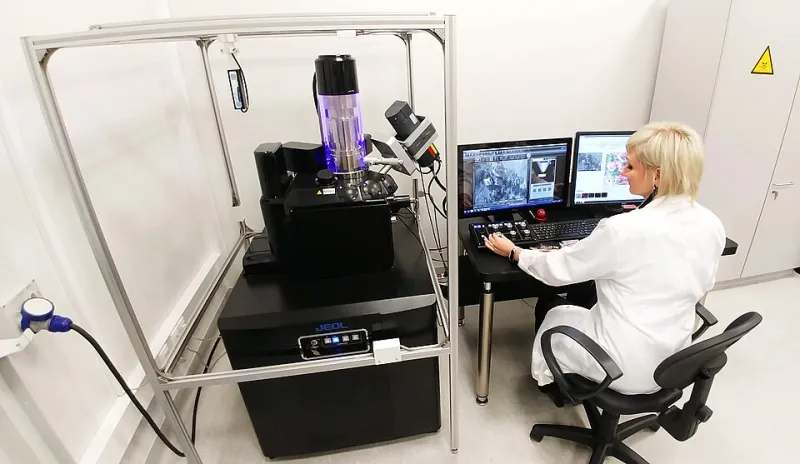
When people hear about measurement inconsistencies in nanotech, the instinct is to blame instrument quality — outdated electron microscopes, poorly maintained atomic force microscopes, underfunded labs making do with second-tier gear. That framing is comfortable because it implies a fixable hardware problem. Buy better tools, train more technicians, problem solved.
But that's not really what's happening here. Many of the labs producing contradictory results are running state-of-the-art equipment at major research universities or well-capitalized private facilities. The deeper issue is that there's no universally agreed-upon protocol for how to use that equipment when characterizing nanoscale materials.
Dynamic light scattering, transmission electron microscopy, X-ray diffraction, atomic force microscopy — each of these techniques probes different physical properties and operates under different assumptions about what it's actually measuring. A particle's "size" as reported by DLS reflects hydrodynamic diameter in solution, which is not the same thing as what TEM imaging shows you in a dried, vacuum-exposed sample. Neither of those is necessarily wrong. They're just answering slightly different questions. The problem is that published papers frequently don't make these distinctions explicit, and peer reviewers — often working under time pressure, often not specialists in every characterization method cited — don't always catch it.
The result is a literature full of findings that look comparable on the surface but are built on incommensurable measurements. When a follow-up team tries to reproduce a result and fails, it's genuinely unclear whether the science was flawed or whether the two groups were just speaking different measurement languages.
Peer Review at the Nanoscale Is Quietly Broken
This is the part that doesn't get discussed enough at conferences or in grant applications, because acknowledging it creates uncomfortable questions about the validity of a lot of published work.
Peer review in nanotech operates on an assumption of shared methodological ground that largely doesn't exist yet. In mature fields, there are standardized testing protocols — ASTM standards, ISO certifications, NIST reference materials — that give reviewers a common baseline for evaluating whether reported results are credible. Nanotech has some of this infrastructure starting to emerge, but coverage is patchy, adoption is inconsistent, and the field is moving faster than the standards bodies can keep up with.
So what fills the gap? Informal consensus within research subgroups, mostly. A community of graphene researchers might converge on certain Raman spectroscopy conventions. A cluster of labs working on lipid nanoparticles might share characterization workflows through collaborations and conference hallway conversations. But these informal standards don't transfer cleanly across subfields, don't get enforced by journals, and definitely don't help when a pharmaceutical company is trying to evaluate whether a university lab's nanoparticle drug delivery results are actually meaningful.
The Proprietary Standards Trap
Here's where things get genuinely frustrating. The organizations with the resources and technical depth to actually build robust, field-wide characterization standards — major semiconductor companies, large pharma, well-funded national labs — are mostly not doing that. Or rather, they're doing it privately.
Instead of pooling resources to develop open, freely accessible measurement protocols that would lift the entire field, major players are investing in proprietary characterization pipelines. The logic is straightforward from a competitive standpoint: if your internal standards for evaluating nanomaterial quality are better than everyone else's, that's a genuine technical moat. You're not going to publish that playbook.
The downstream effect, though, is that the field fractures further. Academic labs can't benchmark against industry standards they can't access. Startups trying to commercialize university research hit a wall when they discover that the characterization data their technology is built on doesn't translate to anything an industrial partner can validate independently. And the reproducibility problem compounds itself because there's no neutral authority publishing reference data that everyone can calibrate against.
NIST has been doing genuinely important work on nanomaterial reference standards, and the National Nanotechnology Initiative has pushed for better coordination. But federal efforts move slowly, and the gap between what those programs can cover and what the field actually needs remains wide.
What Getting This Right Would Actually Require
Solving this isn't technically impossible — it's institutionally hard. A real fix would require something like a coordinated multi-stakeholder effort where academic labs, industry, and standards bodies agree on a tiered characterization framework: minimum reporting requirements for publications, recommended protocols for specific material classes, and certified reference materials that any lab can use to verify their instruments are telling the truth.
Some of this is already being pushed by journals — Nature Nanotechnology and a few others have tightened their characterization reporting requirements in recent years. That's meaningful progress. But journal-level policy is a weak lever when the underlying infrastructure for standardization doesn't exist.
The more promising direction might be community-driven initiatives — open-source protocol repositories, shared round-robin testing programs where labs characterize identical samples and publish the variance data openly, and pre-competitive consortia where companies agree to standardize on baseline methods without giving away their proprietary applications. Some of these exist in embryonic form. None of them have achieved the critical mass needed to actually shift field-wide practice.
Why This Should Matter to You
If you're a researcher, the reproducibility wall is probably something you've bumped into personally, even if you haven't framed it in those terms. If you're an investor or a founder, it's a hidden risk factor in any nanotech bet — because the science your thesis depends on may be less solid than the publication record suggests. And if you're just a curious person following nanotech because the technology genuinely excites you, it's worth knowing that a lot of the breathless headlines about breakthroughs are built on a measurement foundation that the field itself hasn't fully sorted out yet.
None of this means nanotech isn't real or that the progress isn't genuine. It means the field is still in the process of building the shared infrastructure that mature sciences take for granted. The nanoscale is genuinely hard to see clearly, and agreeing on what you're seeing is harder still. That's not a scandal — it's a problem that needs to be named before it can be fixed.
And right now, not enough people are naming it.